
CHEMISTRY GLOSSARY
reactivity series → reaktivni niz
Reactivity series or activity series is a series of elements (usually metals) ranked by their reactivity degree, made for comparison of reactions of elements with other substances, e.g. acids and oxygen.
regeneration → regeneracija
Regeneration is the process of restoring an ion exchange medium to a usable state after exhaustion. The cation exchanger is normally regenerated with hydrochloric acid and the anion exchanger with sodium hydroxide.
iridium → iridij
Iridium was discovered by Smithson Tennant (England) in 1803. The origin of the name comes from the Latin word iris, meaning rainbow, because its salts are highly colored. It is heavy, brittle, white metal. Unreactive in air, water and acids. Attacked by fused NaOH. Metal ignites and burns readily. Iridium is found in gravel deposits with platinum. Used with osmium to tip gold pen points, to make crucible and special containers. Also to make alloys used for standard weights and measures and heat-resistant alloys. Also as hardening agent for platinum.
isoelectric point → izoelektrična točka
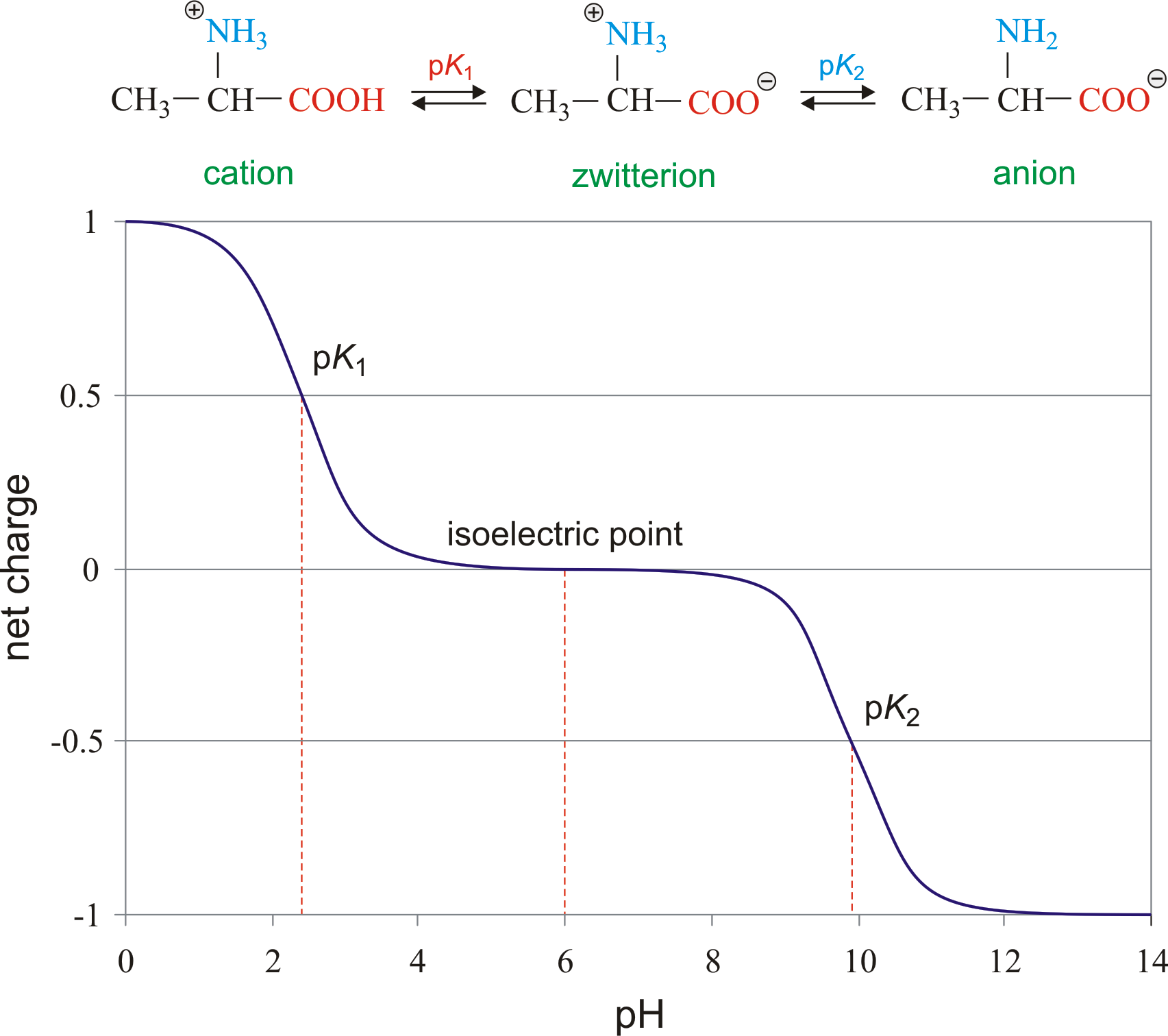
Isoelectric point (pI or IEP) is the pH of a solution or dispersion at which the net charge on the molecules or colloidal particles is zero. In electrophoresis there is no motion of the particles in an electric field at the isoelectric point. The net charge (the algebraic sum of all the charged groups present) of any amino acid, peptide or protein, will depend upon the pH of the surrounding aqueous environment. For example, alanine can have a charge of +1, 0, or -1, depending on the pH of the solution in which it is dissolved.
isoleucine → izoleucin
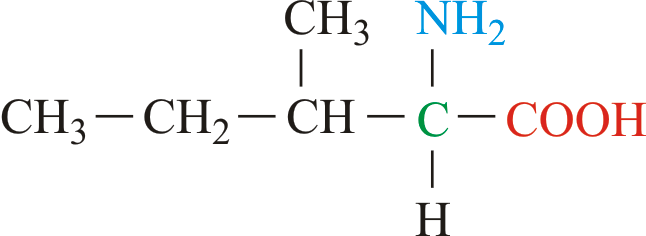
Isoleucine is hydrophobic amino acids with aliphatic side chain. It is one of the three amino acids having branched hydrocarbon side chains. The side chains of these amino acids are not reactive but, these residues are critically important for ligand binding to proteins, and play central roles in protein stability. Isoleucine is an essential amino acid, which means that humans cannot synthesize it, so it must be ingested.
- Abbreviations: Ile, I
- IUPAC name: 2-amino-3-methylpentanoic acid
- Molecular formula: C6H13NO2
- Molecular weight: 131.12 g/mol
saponification → saponifikacija
Saponification is a proces of hydrolysis of esters using hot sodium hydroxide solution to produce the salt of a carboxylic acid. Saponification usually refers to the hydrolysis of esters of fatty acids to manufacture soaps.
kelvin → kelvin
Kelvin (K) is the SI base unit of thermodynamic temperature.
The kelvin, unit of thermodynamic temperature, is the fraction 1/273.16 of the thermodynamic temperature of the triple point of water. The unit was named after the British scientist Sir. W. Thompson, Lord Kelvin (1824-1907).kilogram → kilogram
Kilogram (kg) is the SI base unit of mass; it is equal to the mass of the international prototype of the kilogram.
The prototype of the standard is a cylinder of platinum-iridium alloy (90:10), 39 mm in diameter and 39 mm high. Prototype of the kilogram kept by the Bureau International des Poids et Mesures (International Bureau of Weights and Measures) at Sèevres, near Paris.
Kjeldahl’s method → Kjeldahlov postupak
Kjeldahl’s method is an analytical method for determination of nitrogen in certain organic compounds. The method was developed by the Danish chemist Johan Kjeldahl (1849-1900).
It involves addition of a small amount of anhydrous potassium sulphate to the test compound, followed by heating the mixture with concentrated sulphuric acid, often with a catalyst such as copper sulphate. As a result ammonia is formed. After alkalyzing the mixture with sodium hydroxyde, the ammonia is separated by distillation, collected in standard acid, and the nitrogen determined by back-titration.
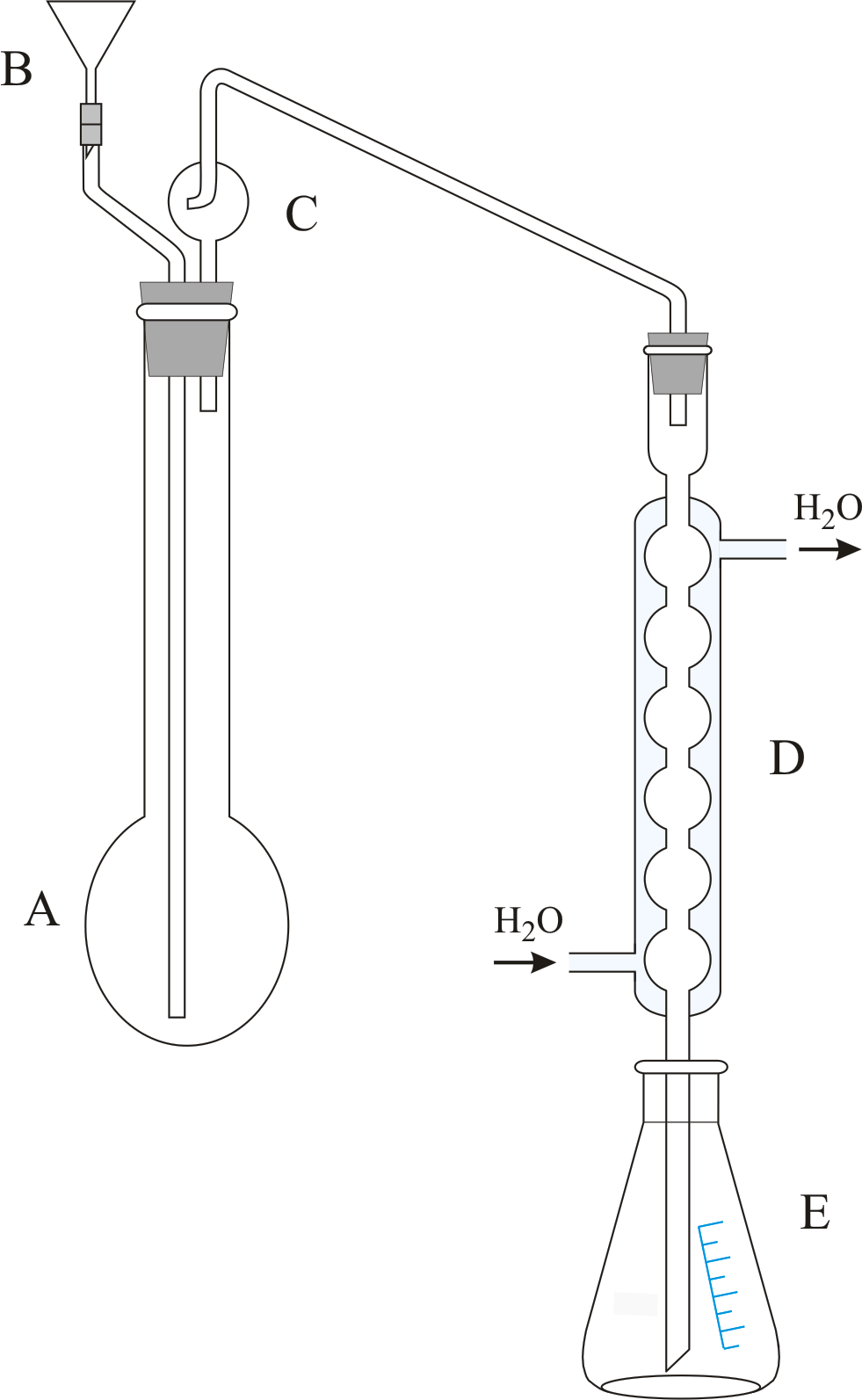
- Kjeldahl flask for decomposition (500 ml – macro or 100 ml - micro)
- funnel for alkaline solution
- Wagner tube (drop catcher)
- condenser
- absorption flask with known volume of standard acid
Citing this page:
Generalic, Eni. "Bronsted-Lowry’s acid - base theory." Croatian-English Chemistry Dictionary & Glossary. 29 June 2022. KTF-Split. {Date of access}. <https://glossary.periodni.com>.


 English

