
CHEMISTRY GLOSSARY
neutron number → neutronski broj
Neutron number (N) is a characteristic property of a specific isotope of an element, equal to the number of neutrons in the nucleus.
Henry’s law → Henryjev zakon
Henry’s law was discovered in 1801 by the British chemist William Henry (1775-1836). At a constant temperature the mass of gas dissolved in a liquid at equilibrium is proportional to the partial pressure of the gas. It applies only to gases that do not react with the solvent.
where pi is the partial pressure of component i above the solution, xi is its mole fraction in the solution, and Kx is the Henry’s law constant (a characteristic of the given gas and solvent, as well as the temperature).
Hesse’s law → Hessov zakon
Hesse’s law says that reaction heat of some chemical change does not depend on the way in which the reaction is conducted, but only on starting and ending system state. Hesse’s law is also known as the law of constant heat summation. Hesse’s law is also known as the law of constant heat summation. The law was first put forward in 1840 by the Swiss-born Russian chemist Germain Henri Hess (1802-1850).
Hesse’s law can be used to obtain thermodynamic data that cannot be measured directly. For example, it is very difficult to control the oxidation of graphite to give pure CO. However, enthalpy for the oxidation of graphite to CO2 can easily be measured. So can the enthalpy of oxidation of CO to CO2. The application of Hess’s law enables us to estimate the enthalpy of formation of CO.
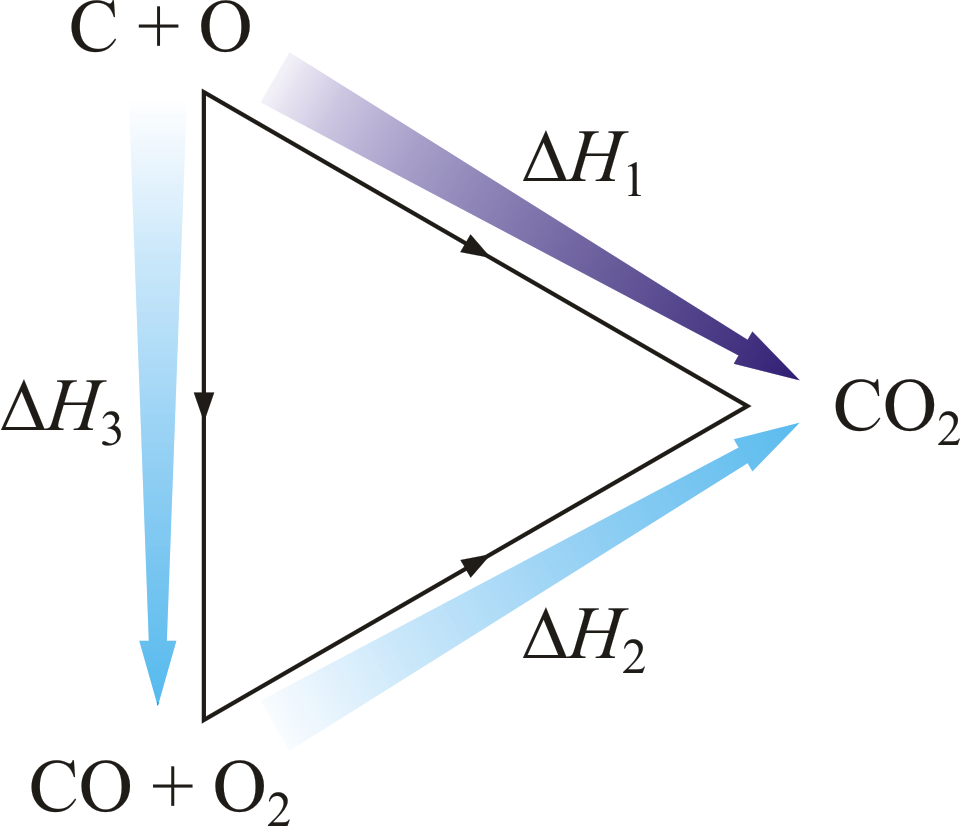
| C(s) + O2(g) →← CO2(g) | ΔrH1 = -393 kJ mol-1 |
| CO(g) + 1/2O2(g) →← CO2(g) | ΔrH2 = -283 kJ mol-1 |
| C(s) + 1/2O2(g) →← CO(g) | ΔrH3 = -110 kJ mol-1 |
The equation shows the standard enthalpy of formation of CO to be -110 kJ/mol.
nominal → nominalno
Nominal is used to describe a process where 100 % accuracy is not guaranteed. For example, sand filtres are usually sold to filtre to a nominal 10 μm, which means that they will filtre most particles of 10 μm and larger, but not all. A filtre which is guaranteed to filtre all particles of 10 μm would be termed absolute rather than nominal.
non-Newtonian fluid → nenewtonski fluid
Non-Newtonian fluid is a fluid whose viscosity changes when the gradient in flow speed changes. Colloidal suspensions and polymer solutions like ketchup and starch/water paste are non-Newtonian fluids.
non-soap cleanser → nesapunsko sredstvo za čišćenje
Non-soap cleansers (detergents) are synthetically produced from byproducts of oil refining and are used in the production of washing powder, shampoos and hair conditioners.
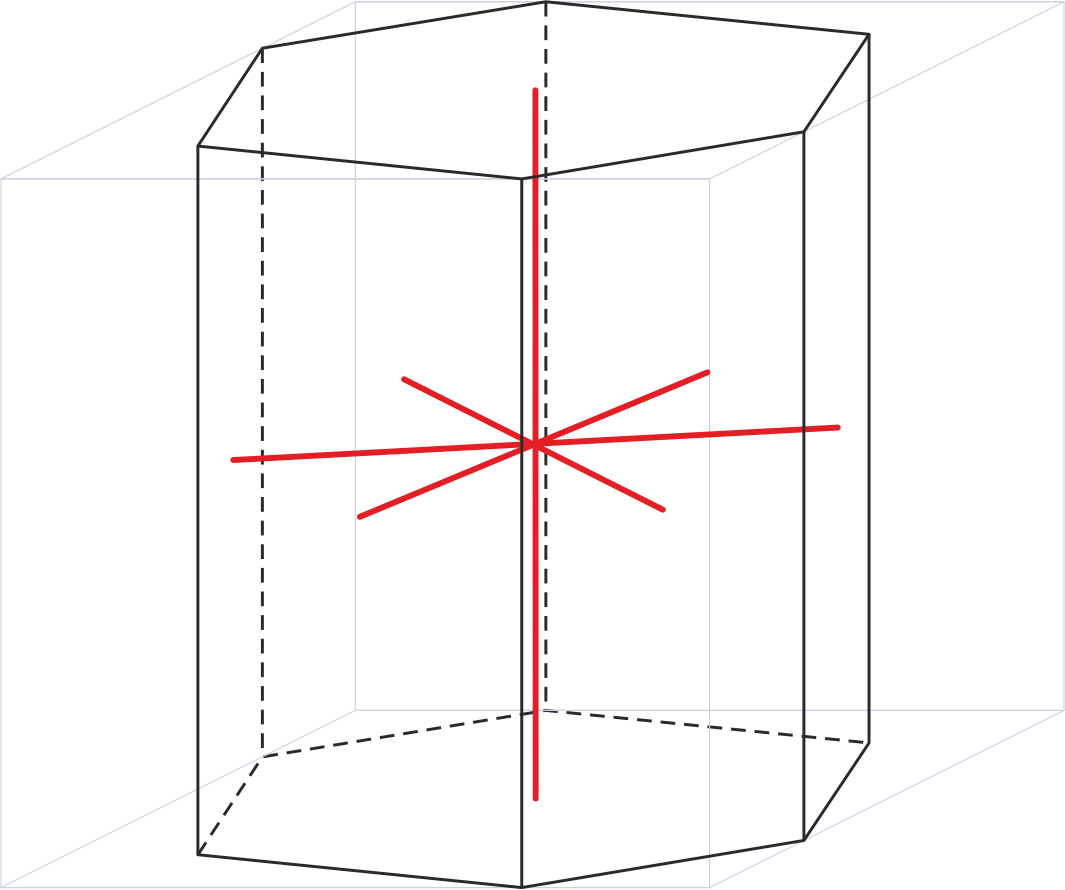
hexagonal crystal system → heksagonski kristalni sustav
Hexagonal crystal system is based on four crystallographic axes. The system of crystallographic axes of the hexagonal crystal system consists of three equivalent horizontal (equatorial) axes of which the positive ends make an angle of 120°. These axes are sometimes denoted as a, b and d axes. The fourth axis is (c) is perpendicular to and shorter or longer than the other three.
Citing this page:
Generalic, Eni. "S.t.p.." Croatian-English Chemistry Dictionary & Glossary. 29 June 2022. KTF-Split. {Date of access}. <https://glossary.periodni.com>.


 English
