
CHEMISTRY GLOSSARY
refractive index → indeks loma
For a non-absorbing medium, refractive index (n) is the ratio of the velocity of electromagnetic radiation (light) in vacuum to the phase velocity of radiation of a specified frequency in the medium.
refractory metal → vatrostalni metal
Refractory metal is a metal having an extremely high melting point, for example tungsten, molybdenum, niobium, tantalum, and rhenium
molecular shape → oblik molekule
Molecular shape is the three dimensional arrangement of atoms in space around a central atom. The molecular formula of a substance does not give an indication of its shape. For example, CO2 is a linear molecule, but SO2 is angular.
The three-dimensional shapes of many small molecules can be predicted by applying the valence shell electron pair repulsion theory (VSEPR). When atoms combine to form molecules, pairs of valence electrons arrange themselves as far from each other as possible. Another way to characterize molecular shape is in terms of hybrid orbitals.
molybdenum → molibden
Molybdenum was discovered by Carl William Scheele (Sweden) in 1778. The origin of the name comes from the Greek word molybdos meaning lead. It is silvery white, very hard metal, but is softer and more ductile than tungsten. Molybdenum is found in the minerals molybdenite (MoS2) and wulfenite (MoO4Pb). Its alloys are used in aircraft, missiles and protective coatings in boiler plate.
monoclinic crystal system → monoklinski kristalni sustav
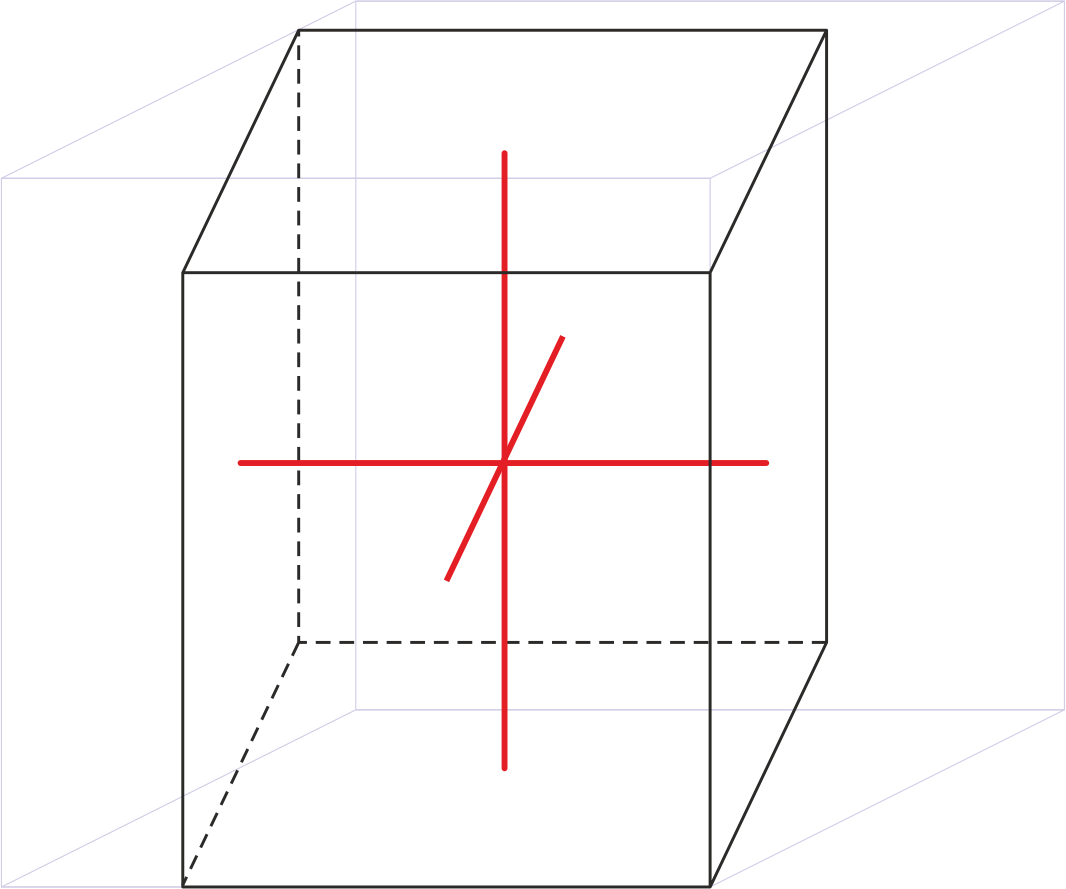
Minerals of the monoclinic crystal system are referred to three unequal axes. Two of these axes (a and c) are inclined toward each other at an oblique angle; these are usually depicted vertically. The third axis (b) is perpendicular to the other two and is called the ortho axis. The two vertical axes therefore do not intersect one another at right angles, although both are perpendicular to the horizontal axis.
a ≠ b ≠ c
α = γ = 90° ≠ β
mustard agent → plikavac
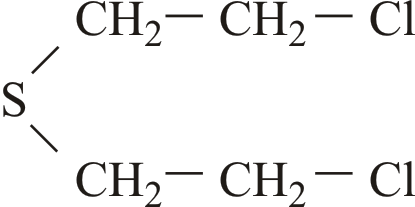
Mustard agents are usually classified as blistering agents owing to the similarity of the wounds caused by these substances resembling burns and blisters. However, since mustard agents also cause severe damage to the eyes, respiratory system and internal organs, they should preferably be described as blistering and tissue-injuring agents. Normal mustard agent (yperite), 1,1-thio-bis-[2-chloroethane], reacts with a large number of biological molecules. The effect of mustard agent is delayed and the first symptoms do not occur between 2-24 hours after exposure. At room temperature, mustard agent is a liquid with low volatility and is very stable during storage.
regeneration → regeneracija
Regeneration is the process of restoring an ion exchange medium to a usable state after exhaustion. The cation exchanger is normally regenerated with hydrochloric acid and the anion exchanger with sodium hydroxide.
relative humidity → relativna vlažnost
Relative humidity is the ratio of the partial pressure of water vapour in air to the saturation vapour pressure of water at the same temperature, expressed as a percentage.
Citing this page:
Generalic, Eni. "S.t.p.." Croatian-English Chemistry Dictionary & Glossary. 29 June 2022. KTF-Split. {Date of access}. <https://glossary.periodni.com>.


 English
