
CHEMISTRY GLOSSARY
erbium → erbij
Erbium was discovered by Carl Gustaf Mosander (Sweden) in 1843. Named after Ytterby, a village in Sweden. It is soft, malleable, silvery metal. Reacts slowly with water. Dissolves in acids. Metal ignites and burns readily. Erbium is found with other heavier rare earths in xenotime and euxenite. Erbium oxide is used in ceramics to obtain a pink glaze. Also a few uses in the nuclear industry and as an alloying agent for other exotic metals.
Millon’s reaction → Millonova reakcija
Millon’s reaction is used for testing proteins by the appearance of red colour which the proteins give by reacting with a solution of mercury in nitric acid.
monochromator → monokromator
Monochromator (from the Greek words mono and chroma meaning single and colour) is an optical device based on dispersion of light by one or more prisms or diffraction gratings into its constituent wavelengths, which are utilized in turn.
fat → mast
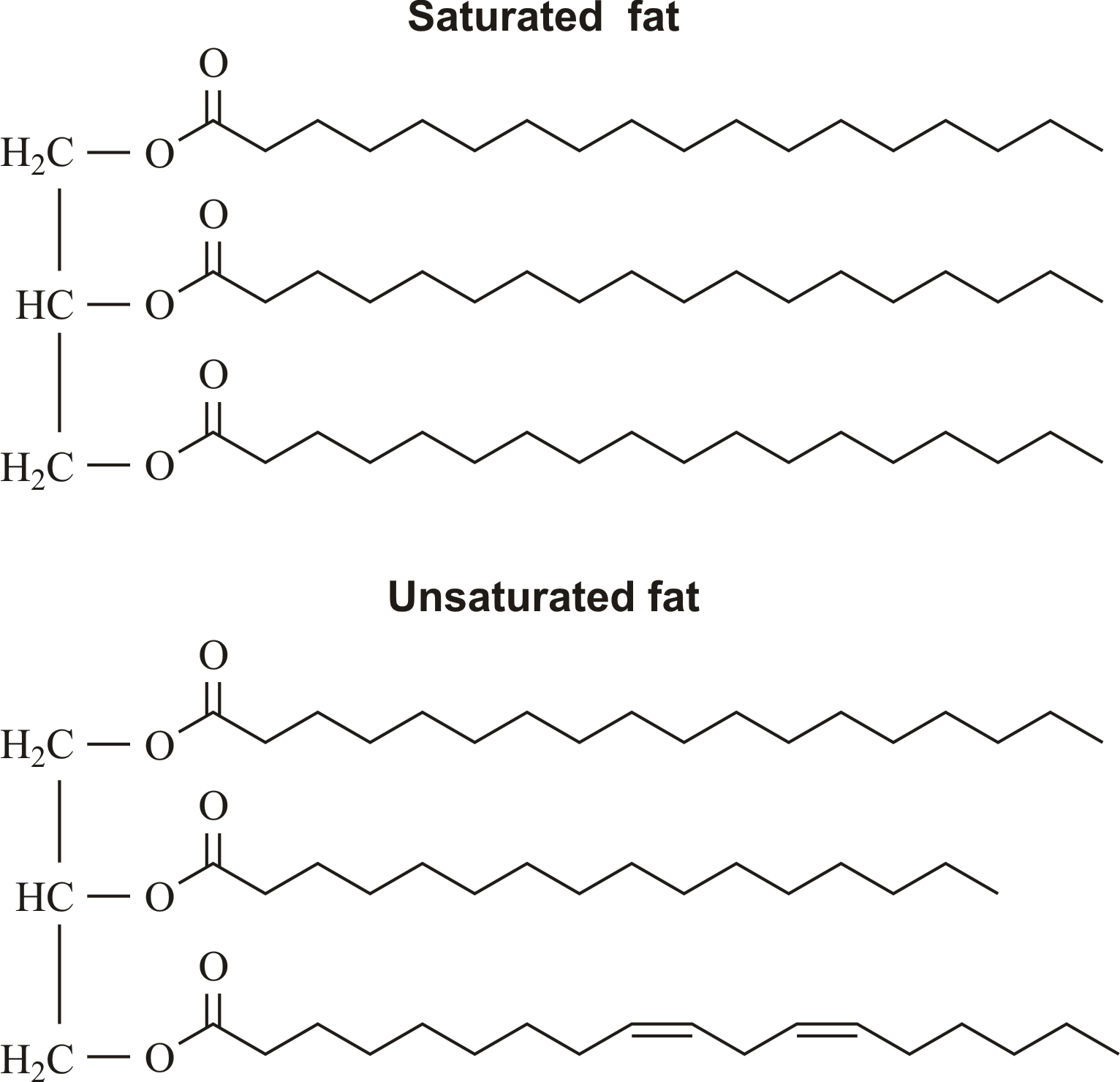
Fats are esters of glycerol and long chain carboxylic acids. Fats occur widely in plants and animals as a means of storing food energy, having twice the calorific value of carbohydrates. Fats derived from plants and fish generally have a greater proportion of unsaturated fatty acids than those from mammals. Fats may be either solid or liquid at room temperature, depending on their structure and composition. Unsaturated fats are liquid at room temperature.
Plant oils may be hardened by the addition of hydrogen atoms, converting double bonds to single bonds. This process is known as hydrogenation. Hydrogenated vegetable oils are often present in margarine and other processed foods.
Alkali hydrolysis of fat with sodium hydroxide it gives glycerol and soap (i.e. a mixture of the sodium salts of the fatty acids).
neptunium → neptunij
Neptunium was discovered by Edwin M. McMillan and P. H. Abelson (USA) in 1940. Named after the planet Neptune. It is rare, silvery radioactive metal. Resists alkalis; reacts with oxygen and acids. Attacked by steam. Radiotoxic. Neptunium was produced by bombarding uranium with slow neutrons.
filter paper → filtar papir
Filter paper is a quantitative paper used for filtering and made of pure cellulose treated with hydrochloric and hydrofluoric acid. This kind of paper burns out practically without any remains (less than 0.0001 g ashes). Different types of paper are marked with numbers; qualitative bears marking 595 or 597 and quantitative 589 or 590. Dependable upon precipitate character, different types of filter paper are used:
- black band (5891) - 100 mL of fluid flows through it in 20 s to 30 s. It is used for filtering of gelatinous precipitates.
- white band (5892) - 100 mL of fluid flows through it in 40 s to 60 s. It is used for coarse crystalline precipitates filtration.
- blue band (5893) - 100 mL of fluid flows through it in 200 s to 400 s. It is used for fine crystalline precipitates.
fluorine → fluor
Fluorine was discovered by Henri Moissan (France) in 1886. The origin of the name comes from the Latin word fluere meaning to flow. It is pale yellow to greenish gas, with an irritating pungent odour. Extremely reactive, flammable gas. Reacts violently with many materials. Toxic by inhalation or ingestion. Does not occur uncombined in nature. Fluorine is found in the minerals fluorite (CaF2) and cryolite (Na3AlF6). Electrolysis of hydrofluoric acid (HF) or potassium acid fluoride (KHF2) is the only practical method of commercial production. Used in refrigerants and other fluorocarbons. Also in toothpaste as sodium fluoride (NaF).
gadolinium → gadolinij
Gadolinium was discovered by Jean de Marignac (France) in 1880. Named after the mineral gadolinite, named for J. Gadolin, a Finnish chemist and mineralogist. It is soft, ductile, silvery-white metal. Reacts slowly with water and oxygen. Dissolves in acids. Metal ignites and burns readily. Gadolinium is found with other rare earths in gadolinite and monazite sand. Used in steel alloying agents and the manufacture of electronic components.
germanium → germanij
Germanium was discovered by Clemens Winkler (Germany) in 1886. The origin of the name comes from the Latin word Germania meaning Germany. It is greyish-white semi-metal. Unaffected by alkalis and most (except nitric) acids. Stable in air and water. Germanium is obtained from refining copper, zinc and lead. Widely used in semiconductors. It is a good semiconductor when combined with tiny amounts of phosphorus, arsenic, gallium and antimony.
Citing this page:
Generalic, Eni. "Bronsted-Lowry’s acid - base theory." Croatian-English Chemistry Dictionary & Glossary. 29 June 2022. KTF-Split. {Date of access}. <https://glossary.periodni.com>.


 English

