
CHEMISTRY GLOSSARY
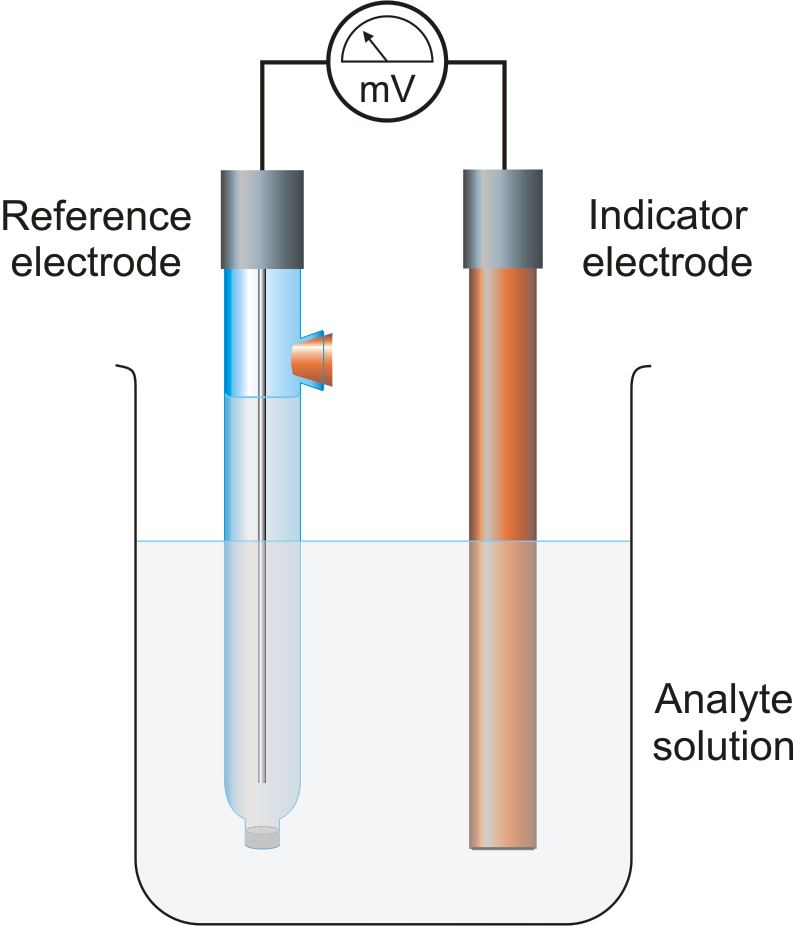
indicator electrode → indikatorska elektroda
Indicator electrode is working in one of the electrodes in some classical two-electrode cells, e.g., in a potentiometric electroanalytical setup where the potential of the measuring electrode (against a reference electrode) is a measure of the concentration (more accurately activity) of a species in the solution.
indium → indij
Indium was discovered by Ferdinand Reich and Hieronymus Theodor Richter (Germany) in 1863. Named after the indicum (colour indigo), the colour it shows in a spectroscope. It is rare, very soft, silver-white metal. Stable in air and water. Dissolves in acids. Metal can ignite and burn. Indium is found in certain zinc ores. Used to coat high speed bearings and as an alloy that lowers the melting point of other metals. Relatively small amounts are used in dental items and in electronic semiconductors.
inert electrode → inertna elektroda
Inert electrode is an electrode that serves only as a source or sink for electrons without playing a chemical role in the electrode reaction. Precious metals, mercury, and carbon are typically used as inert electrodes. The inert nature of the electrode can sometimes be questioned. While the electrode may not take part in the reaction as a reactant or product, it still can act as an electrocatalyst.
inertia → inercija
Inertia is an expression for the tendency of all bodies to resist motion, or to continue in motion if already moving. If a body undergoes linear motion (translation), inertia corresponds to the mass of the body. In order to express inertia of a rotating body, the so-called rotational inertia is defined as suitable physical quantity. A bowling ball has more inertia than a tennis ball, due to its higher mass.
inertial reference frames → inercijski referentni sustavi
When two frames of reference are moving relative to each other at constant velocity, they are said to be inertial reference frames. The observers from two such inertial frames measure, in general, different velocities of a moving particle. On the other hand, they measure the same acceleration for the particle. The laws of physics must have the same form in all inertial reference frames (the principle of invariance).
infrared radiation → infracrveno zračenje
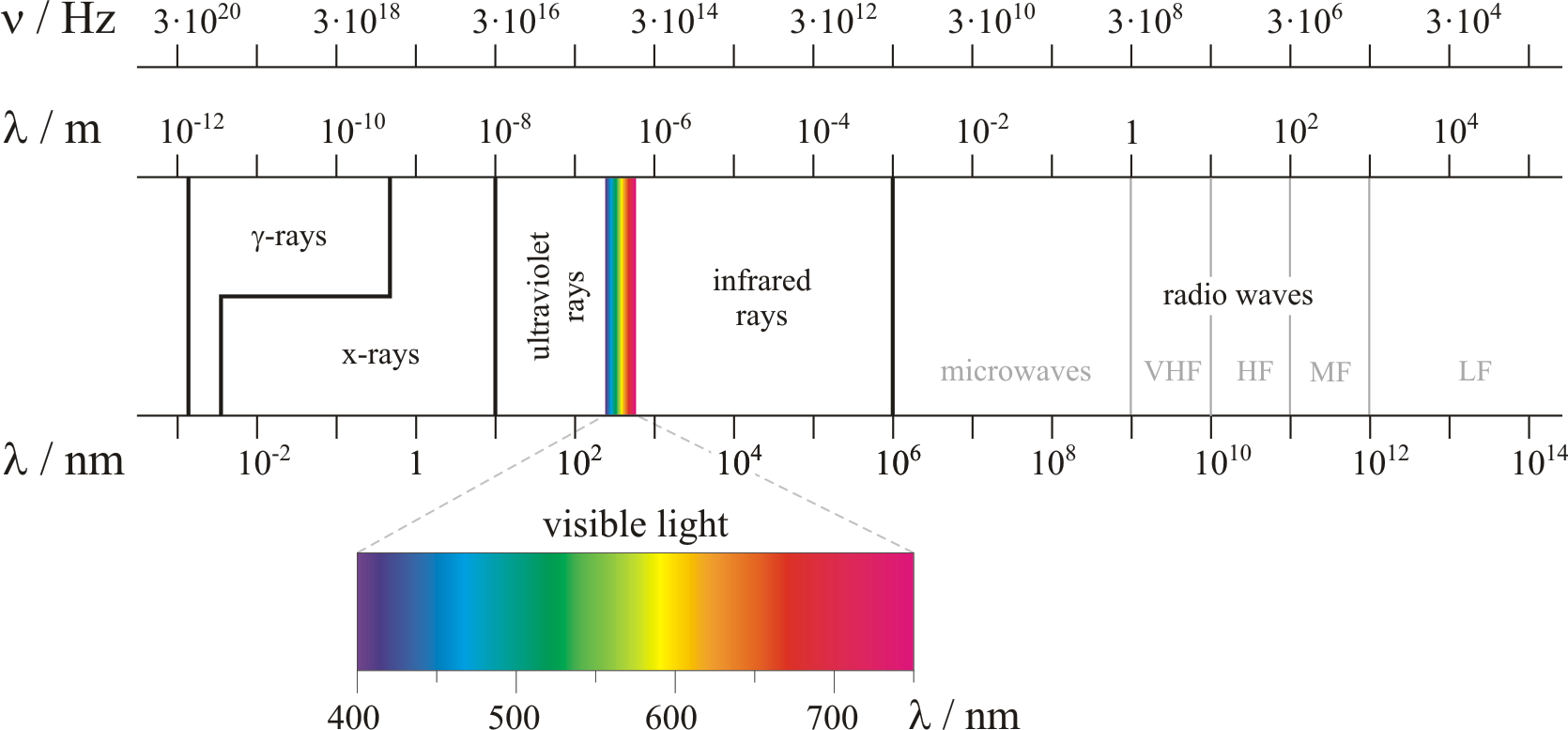
Infrared radiation is an electromagnetic radiation within the area from 1.0 μm to 300 μm, and is responsible for the transmission of radiant heat.
international system of units → međunarodni sustav jedinica
International System of Units (SI) is the unit system adopted by the General Conference on Weights and Measures in 1960 and recommended for use in all scientific and technical fields. It consists of seven base units (meter, kilogram, second, ampere, kelvin, mole, candela), plus derived units and prefixes.
invert sugar → invertni šećer
Invert sugar is a mixture of equal parts of glucose and fructose resulting from the hydrolysis of sucrose (saccharose). The name stemming from the fact that it rotates of plane polarized light in the opposite direction of sucrose. Sucrose is dextrorotatory - it rotates polarized light clockwise ([α]D = +66.5°). Invert sugar rotates the plane of the polarized light counterclockwise ([α]D = -22°) due to the strongly levorotatory nature of fructose ([α]D = -92°).
Homemade artificial honey (invert sugar syrup): Dissolve two parts of household sugar (1 kg) with stirring in one part of water (0.5 kg) in a saucepan over low heat. Add 1 g of citric acid or the juice of one lemon to the mixture. Bring the ingredients to a slow boil. It can take anywhere between 15 minutes to 1 hour. The end result is sticky, golden syrup. Let it sit at room temperature until it is cool.
iodine → jod
Iodine was discovered by Bernard Courtois (France) in 1811. The origin of the name comes from the Greek word iodes meaning violet. It is shiny, black, non-metallic solid with characteristic odour. Sublimes easily and as a gas it is violet and intensely irritating to the eyes, nose and throat. Iodine occurs on land and in the sea in sodium and potassium compounds. Required in small amounts by humans. Once used as an antiseptic, but no longer due to its poisonous nature.
ion exchanger → ionski izmjenjivač
Ion-exchanger is a solid or liquid material containing ions that are exchangeable with other ions with a like charge that are present in a solution in which the material is insoluble. Ion-exchange resins consist of various copolymers having a cross-linked three-dimensional structure to which ionic groups have been attached.
Citing this page:
Generalic, Eni. "S.t.p.." Croatian-English Chemistry Dictionary & Glossary. 29 June 2022. KTF-Split. {Date of access}. <https://glossary.periodni.com>.


 English
