
CHEMISTRY GLOSSARY
Rankine cycle → Rankineov ciklus
Rankine cycle is a thermodynamic cycle which can be used to calculate the ideal performance of a heat engine that uses a condensable vapour as the working fluid.
recrystallisation → rekristalizacija
Recrystallisation is a formation of a new, strain free grain structure from the existing one in cold worked metal, usually accomplished by heating. The change from one crystal structure to another, as occurs on heating or cooling through a critical temperature.
specific quantity → specifična veličina
Specific quantity is often convenient to express an extensive quantity (e.g., volume, enthalpy, heat capacity, etc.) as the actual value divided by mass. The resulting quantity is called specific volume, specific enthalpy, etc.
spontaneously combustible → samozapaljivi materijal
Spontaneously combustible materials are materials that can ignite without an external source of heat. Heat sufficient to reach the ignition temperature may be generated by reaction with oxygen in the air, by the absorption of moisture, from heat generated during processing, or even from radioactive decay.
face-centered cubic lattice → plošno centrirana kubična rešetka
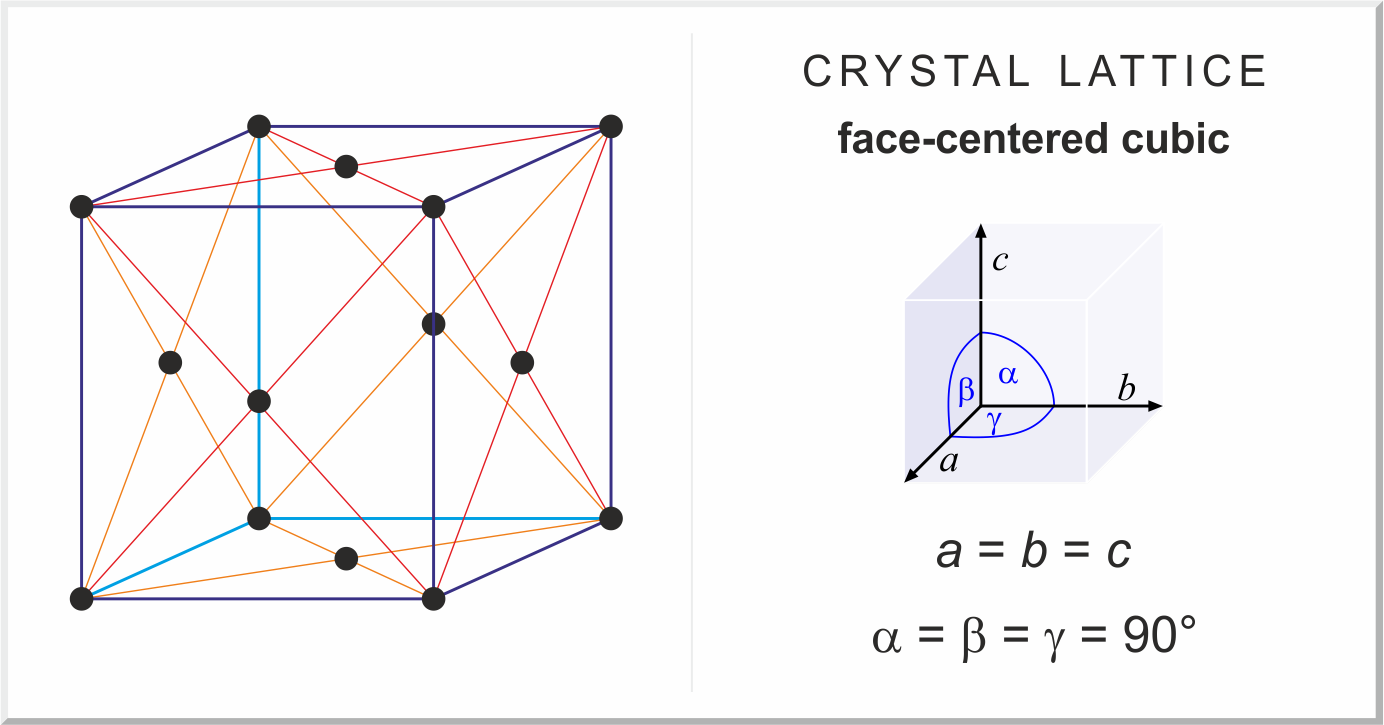
Face-centered cubic lattice (fcc or cubic-F), like all lattices, has lattice points at the eight corners of the unit cell plus additional points at the centers of each face of the unit cell. It has unit cell vectors a =b =c and interaxial angles α=β=γ=90°.
The simplest crystal structures are those in which there is only a single atom at each lattice point. In the fcc structures the spheres fill 74 % of the volume. The number of atoms in a unit cell is four (8×1/8 + 6×1/2 = 4). There are 26 metals that have the fcc lattice.
fat → mast
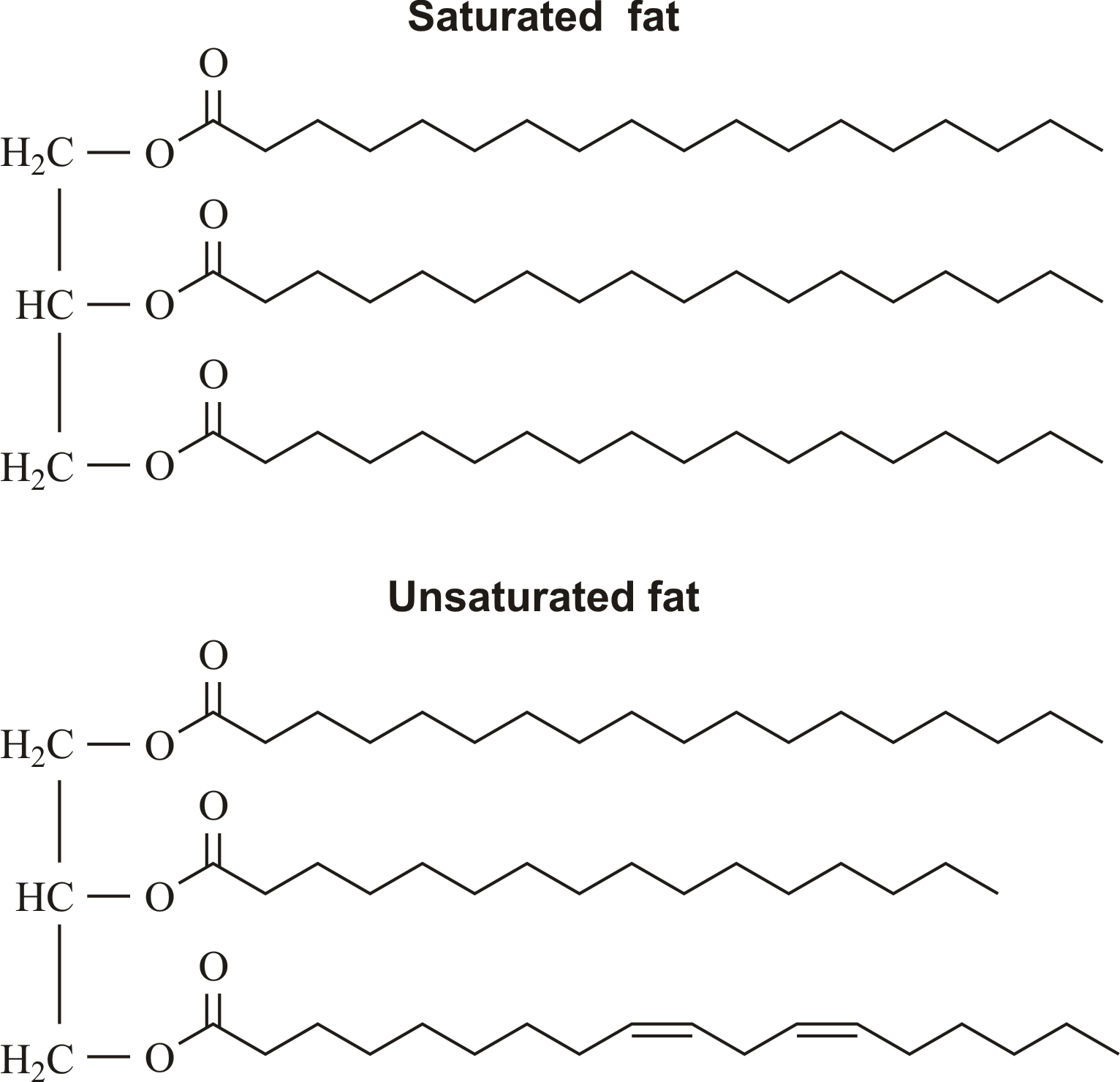
Fats are esters of glycerol and long chain carboxylic acids. Fats occur widely in plants and animals as a means of storing food energy, having twice the calorific value of carbohydrates. Fats derived from plants and fish generally have a greater proportion of unsaturated fatty acids than those from mammals. Fats may be either solid or liquid at room temperature, depending on their structure and composition. Unsaturated fats are liquid at room temperature.
Plant oils may be hardened by the addition of hydrogen atoms, converting double bonds to single bonds. This process is known as hydrogenation. Hydrogenated vegetable oils are often present in margarine and other processed foods.
Alkali hydrolysis of fat with sodium hydroxide it gives glycerol and soap (i.e. a mixture of the sodium salts of the fatty acids).
filter flask → boca za odsisavanje
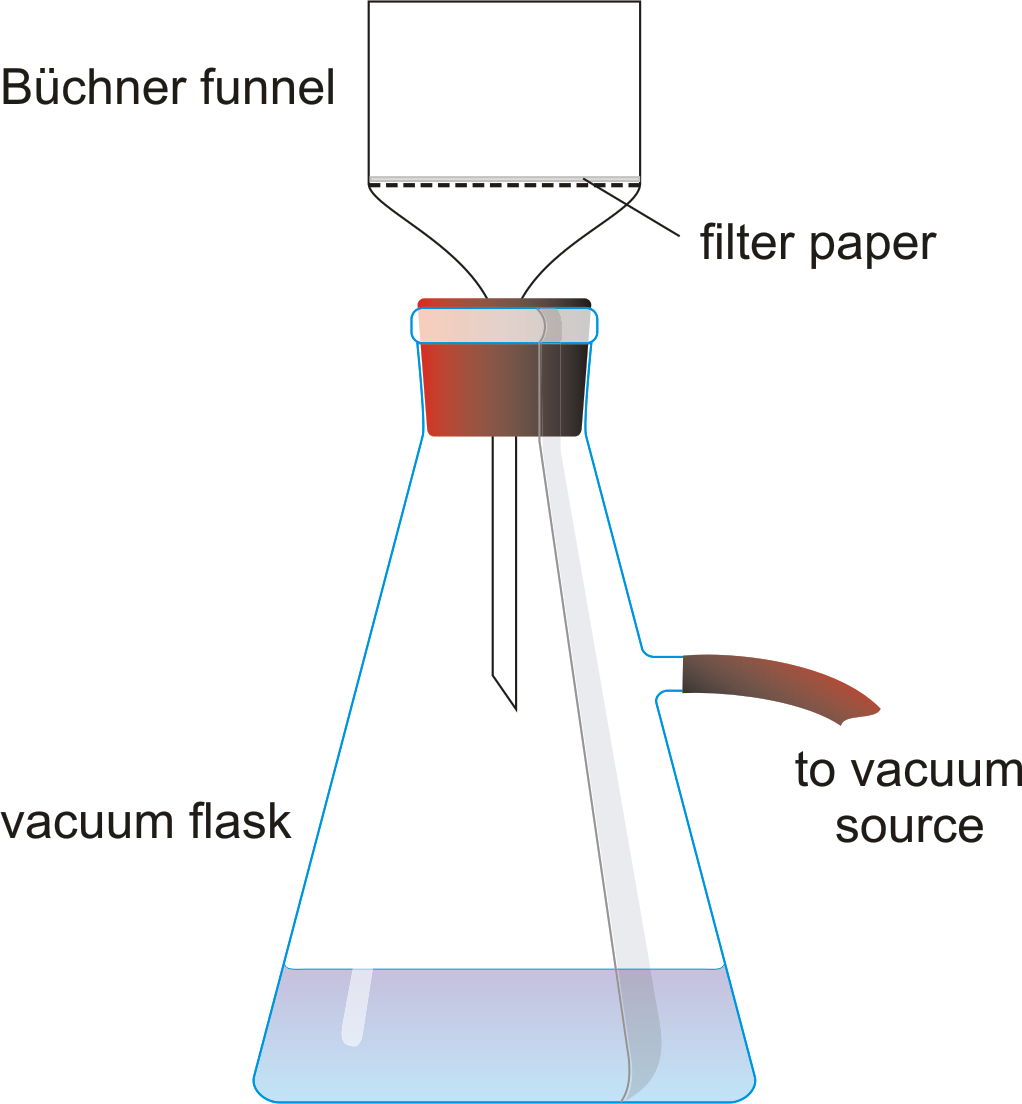
Filter flask, also known as a vacuum flask, is a flask with a side arm to which a vacuum can be applied. It usually have heavy side walls to withstand high vacuum.
stereospecific reaction → stereospecifična reakcija
Stereospecific reactions are reactions that proceed predominantly to a single stereoisomeric product out. All metabolic conversions involving chiral molecules are stereospecific.
system → sustav
System is the region under consideration, as distinguished from the rest of the universe (the environment). Systems may be separated from environments by boundaries that prevent the transfer of mass (a closed system), of heat (an adiabatic system), or of any energy (an isolated system). Systems that exchange mass with the environment are open systems.
Citing this page:
Generalic, Eni. "Reflexive heat sink." Croatian-English Chemistry Dictionary & Glossary. 29 June 2022. KTF-Split. {Date of access}. <https://glossary.periodni.com>.


 English

