
CHEMISTRY GLOSSARY
oxidating agent → oksidans
Oxidating agent is a substance that receives electrons and oxidates other substances. Oxidating agent is always reduced in this reaction.
permeability → permeabilnost
Permeability (Latin permeare, to pass through) is a passage or diffusion of a gas, vapour, liquid, or solid through a material without physically or chemically affecting it.
pigment → pigment
Pigments are the substances that give paint colour. Pigments are derived from natural or synthetic materials that have been ground into fine powders. A pigment is different from a dye in that a pigment is insoluble in the media in which it is used.
Pigment is an organic substance found in plant and animal cells that creates colouring.
plastic → plastika
Plastic is a material that can be shaped by the application of heat or pressure. Most are based on synthetic polymers although some are the product of natural substances (such as cellulose derivatives, but excluding the rubbers.). They are usually light and permanent solids, being also heat and electric isolators. If the materials soften again when reheated, they are said to be thermoplastic. If, after fashioning, they resist further applications of heat, they are said to be thermoset.
polarogram → polarogram
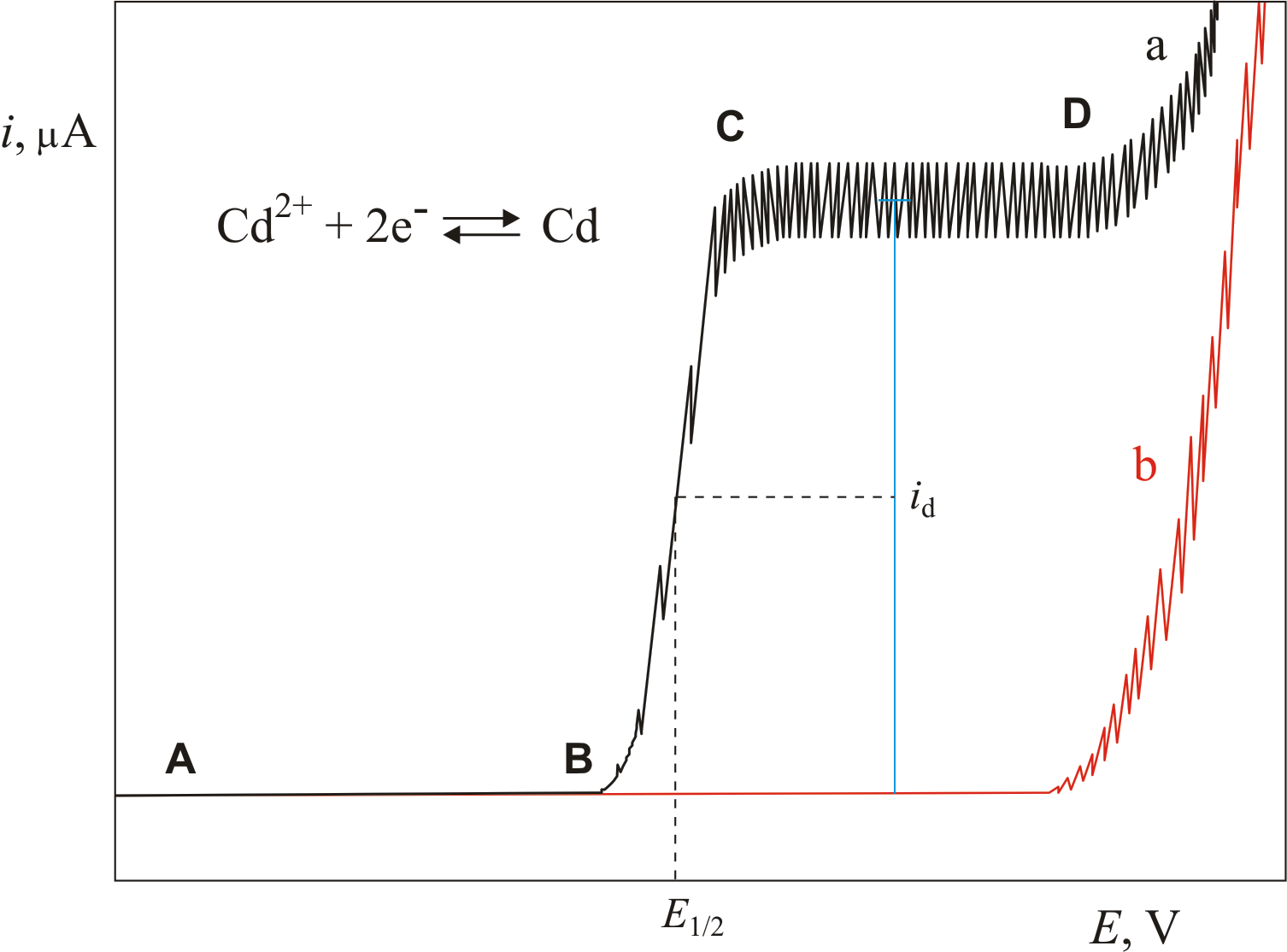
Polarogram is a graph of current versus potential in a polarographic analysis. The position of a polarographic wave in a polarogram along the x axis (E1/2) provides an identity of the substance while the magnitude of the limiting diffusion current (id) provides the concentration of this substance.
polymer → polimer
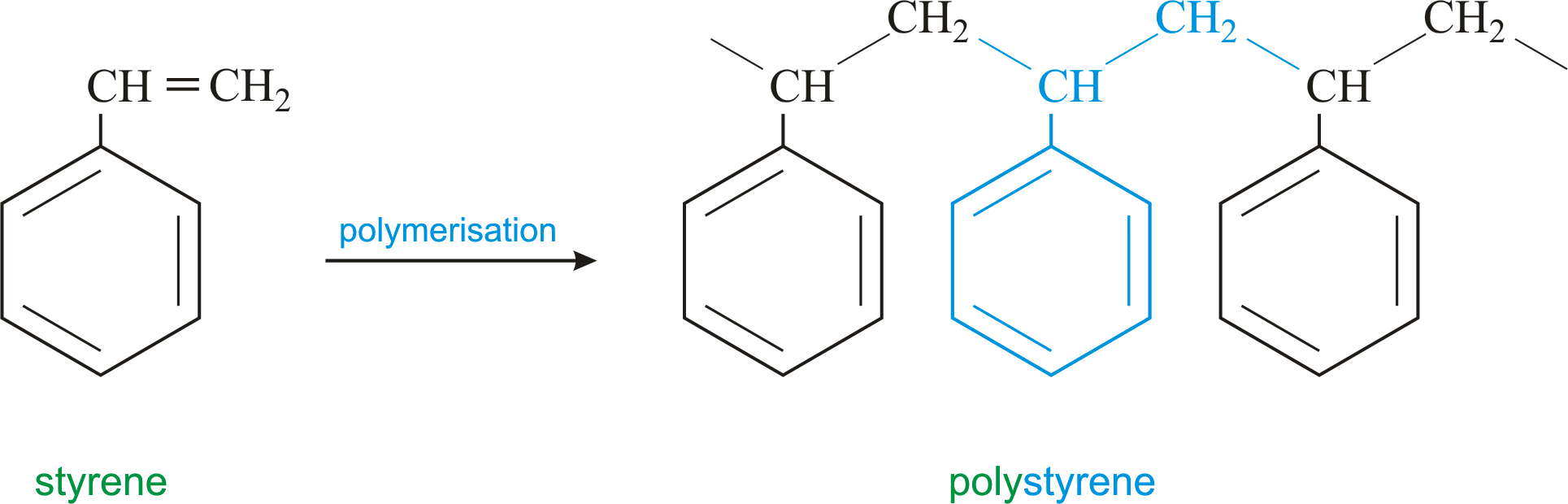
Polymer is a substance composed of molecules of high relative molecular mass (molecular weight), the structure of which essentially comprises the multiple repetition of units derived, actually or conceptually, from molecules of low relative molecular mass (monomers). In most cases the number of monomers is quite large and is often not precisely known. A single molecule of a polymer is called a macromolecule. Polystyrene is light solid material obtained by polymerisation of styrene (vinyl benzene).
precipitate → precipitat
Precipitate or the deposit is an insoluble solid formed by reactions in a solution. For example, when a solution of silver nitrate is added to a solution of sodium chloride, insoluble silver chloride precipitates.
preservative → konzervans
Preservatives are substances that will prevent the development of wood-destroying fungi, borers of various kinds, and other harmful insects that deteriorate wood.
polymorphism → polimorfija
Polymorphism is the ability of a solid substance to crystallise into more than one different crystal structure. Different polymorphs have different arrangements of atoms within the unit cell, and this can have a profound effect on the properties of the final crystallised compound. The change that takes place between crystal structures of the same chemical compound is called polymorphic transformation.
The set of unique crystal structures a given compound may form are called polymorphs. Calcium carbonate is dimorphous (two forms), crystallizing as calcite or aragonite. Titanium dioxide is trimorphous; its three forms are brookite, anatase, and rutile. The prevailing crystal structure depends on both the temperature and the external pressure.
Iron is a metal with polymorphism structure. Each structure stable in the range of temperature, for example, when iron crystallizes at 1 538 °C it is bcc (δ-iron), at 1 394 °C the structure changes to fcc (γ-iron or austenite), and at 912 °C it again becomes bcc (α-iron or ferrite).
Polymorphism of an element is called allotropy.
Citing this page:
Generalic, Eni. "Optički aktivna tvar." Croatian-English Chemistry Dictionary & Glossary. 29 June 2022. KTF-Split. {Date of access}. <https://glossary.periodni.com>.


 English
