
CHEMISTRY GLOSSARY
molar enthalpy of melting → molarna entalpija taljenja
Molar enthalpy of melting (Δs lH) is a change of enthalpy during melting divided by the molarity of a solid matter, and is equal to the energy used when melting is conducted under constant pressure.
molar quantity → molarna veličina
Molar quantity is often convenient to express an extensive quantity (e.g., volume, enthalpy, heat capacity, etc.) as the actual value divided by the amount of substance (number of moles). The resulting quantity is called molar volume, molar enthalpy, etc.
molar volume → molarni volumen
Molar volume is the volume occupied by substance per unit amount of substance. The volume of the gas at 0 °C and 101 325 Pa is 22.4 dm3mol-1.
monochromator → monokromator
Monochromator (from the Greek words mono and chroma meaning single and colour) is an optical device based on dispersion of light by one or more prisms or diffraction gratings into its constituent wavelengths, which are utilized in turn.nascent state → nascentno stanje
Nascent state is an especially active state of an element in a moment when it is released from a compound during chemical reaction, e.g. nascent hydrogen.
molar mass → molarna masa
Molar mass is the mass of one mole of a substance.
It is normally expressed in units of g mol-1, in which case its numerical value is identical with the relative molecular mass.
mole → mol
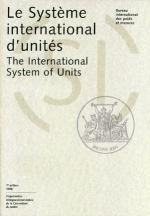
Mole (mol) is the SI base unit of amount of substance.
The mole is the amount of substance of a system which contains as many elementary entities as there are atoms in 0.012 kg of carbon 12.
When the mole is used, the elementary entities must be specified and may be atoms, molecules, ions, electrons, other particles, or specified groups of such particles. In this definition, it is understood that the carbon 12 atoms are unbound, at rest and in their ground state.
Citing this page:
Generalic, Eni. "Optički aktivna tvar." Croatian-English Chemistry Dictionary & Glossary. 29 June 2022. KTF-Split. {Date of access}. <https://glossary.periodni.com>.


 English