
CHEMISTRY GLOSSARY
activated charcoal → aktivni ugljen
Activated charcoal or activated carbon is charcoal that has been activated for adsorption by steaming or by heating in a vacuum. Charcoal is obtained by burning wood, nutshells, coconut husks or other materials. Charcoal becomes activated by heating it with steam to approximately 1000 °C in the absence of oxygen.
The chemical nature of amorphous carbon, combined with a high surface area makes it an ideal medium for the adsorption of organic chemicals. A single gram of such material can have 400 m2 to 1 200 m2 square meters of surface area. Activated charcoal is widely used to decolorize liquids, recover solvents, and remove toxins from water and air.
adrenaline → adrenalin
Adrenaline was the first naturally produced hormone to be isolated in its pure state. It is known as epinephrine, but its chemical name is 1-[3,4-dihydroxyphenol]-2-methylaminoethanol. Adrenaline is a hormone, produced by the medulla of the adrenal glands, that increases heart activity, improves the power and prolongs the action of muscles, and increases the rate and depth of breathing to prepare the body for "fright, flight, or fight". At the same time it inhibits digestion and excretion.
antiparticle → antičestica
Antiparticle is a particle having the same mass as a given elementary particle and a charge equal in magnitude but opposite in sign.
artificial radioactivity → umjetna radioaktivnost
Artificial radioactivity is a creation, with the help of an accelerator or in the nuclear reactor, of isotopes (radionuclides) which are found in nature because they are unstable and by radioactive conversion they are converted to stable isotopes.
atomic number → atomski broj
Atomic number (Z) is a characteristic property of an element, equal to the number of protons in the nucleus. The atomic number and the element symbol are two alternate ways to label an element. In nuclide symbols, the atomic number is a leading subscript; for example, in 2He.
alkali metal → alkalijski metal
Alkali metal is a term that refers to six elements: lithium (Li), sodium (Na), potassium (K), rubidium (Rb), caesium (Cs), and francium (Fr). These elements make up group 1 of the periodic table of elements. They all form singly charged positive ions, and are extremely reactive. They react violently with water, forming hydroxides and releasing hydrogen gas and heat. Caesium and francium are the most reactive and lithium is the least.
alkaline earth metal → zemnoalkalijski metal
Alkali earth metal is a term that refers to six elements: beryllium (Be), magnesium (Mg), calcium (Ca), strontium (Sr), barium (Ba), and radium (Ra). These elements make up group 2 of the periodic table of elements. They all exhibit a single oxidation state, +2. They are all light and very reactive. Barium and radium are the most reactive and beryllium is the least.
To denote slightly soluble metal oxides chemists formerly used the term "earth". The oxides of barium, strontium, and calcium resemble alumina (Al2O3), a typical "earth", but form alkaline mixtures with water. For this reason barium, strontium, and calcium were called alkaline earth metals. This name has now been extended to include all of the elements of group 2.
alkanes → alkani
Alkanes (paraffins) are acyclic branched or unbranched hydrocarbons having the general formula CnH2n+2, and therefore consisting entirely of hydrogen atoms and saturated carbon atoms. In the systematic chemical nomenclature alkane names end in the suffix -ane. They form a homologous series (the alkane series) methane (CH4), ethane (C2H6), propane (C3H8), butane (C4H10), etc. The lower members of the series are gases; the high-molecular mass alkanes are waxy solid. Generaly the alkanes are fairly unreactive. They form haloalkanes with halogens when irradiated with ultraviolet radiation. Alkanes are present in natural gas and petroleum.
allotrope → alotrop
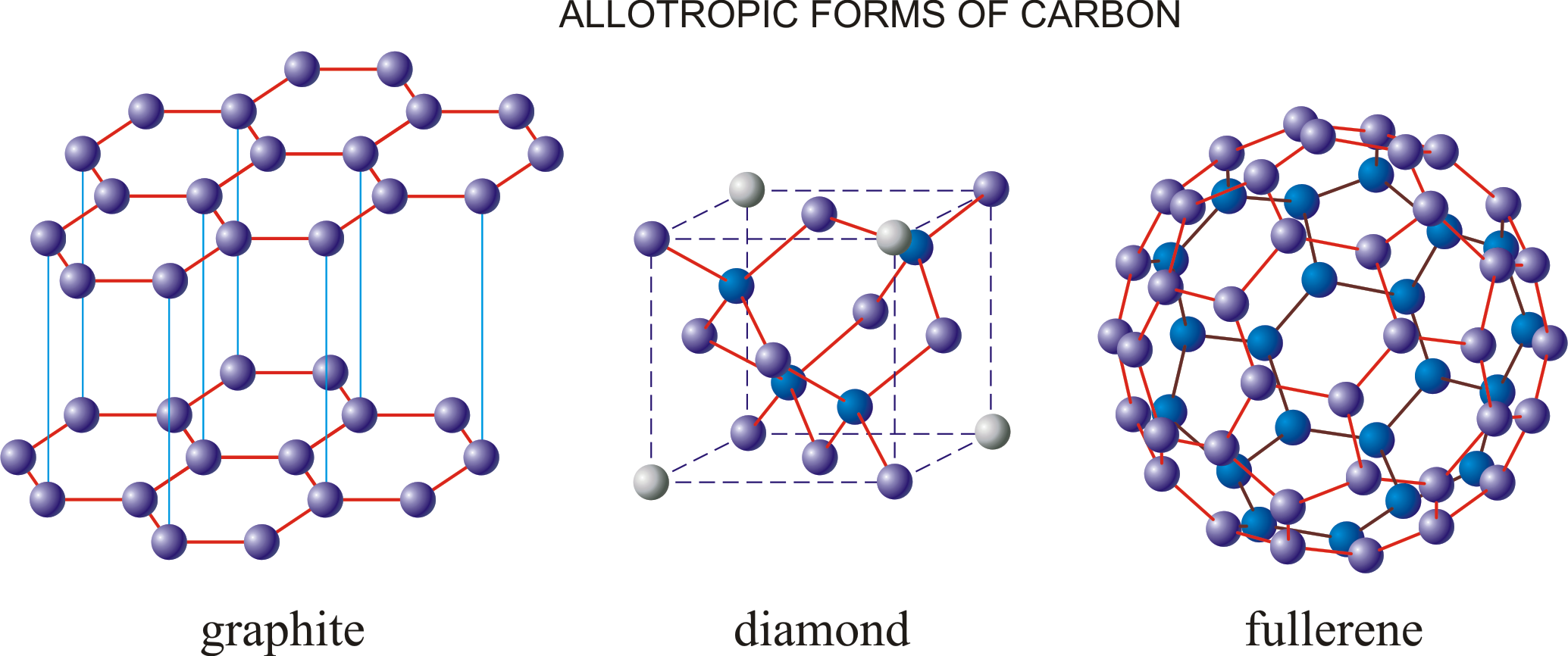
Allotropes are the elements which exist in two or more different forms in the same physical state. Allotropes generally differ in physical properties and may also differ in chemical activity.
Diamond, graphite and fullerenes are three allotropes of the element carbon. Graphite is a soft, black, slippery substance; by contrast, diamond is one of the hardest substances known. The different properties of the allotropes arise from their chemical structures. Diamonds typically crystallize in the cubic crystal system and consist of tetrahedrally bonded carbon atoms. Graphite crystallizes in the hexagonal system. In the fullerenes, the carbon atoms taking the form of a hollow sphere, ellipsoid, or tube.
In some cases, the allotropes are stable over a temperature range, with a definite transition point at which one changes into the other. For instance, tin has two allotropes: white (metallic) tin stable above 13.2 °C and grey (nonmetallic) tin stable below 13.2 °C.
The term allotropes may also be used to refer to the molecular forms of an element. Ozone is a chemically active triatomic allotrope of the element oxygen.
Avogadro constant → Avogadrova konstanta
Avogadro constant (NA or L) is the number of elementary entities in one mole of a substance.
It has the value (6.022 045±0.000 031)×1023 mol-1.
Citing this page:
Generalic, Eni. "Distribution of elements in nature." Croatian-English Chemistry Dictionary & Glossary. 29 June 2022. KTF-Split. {Date of access}. <https://glossary.periodni.com>.


 English