
CHEMISTRY GLOSSARY
abundance of elements → rasprostranjenost elemenata
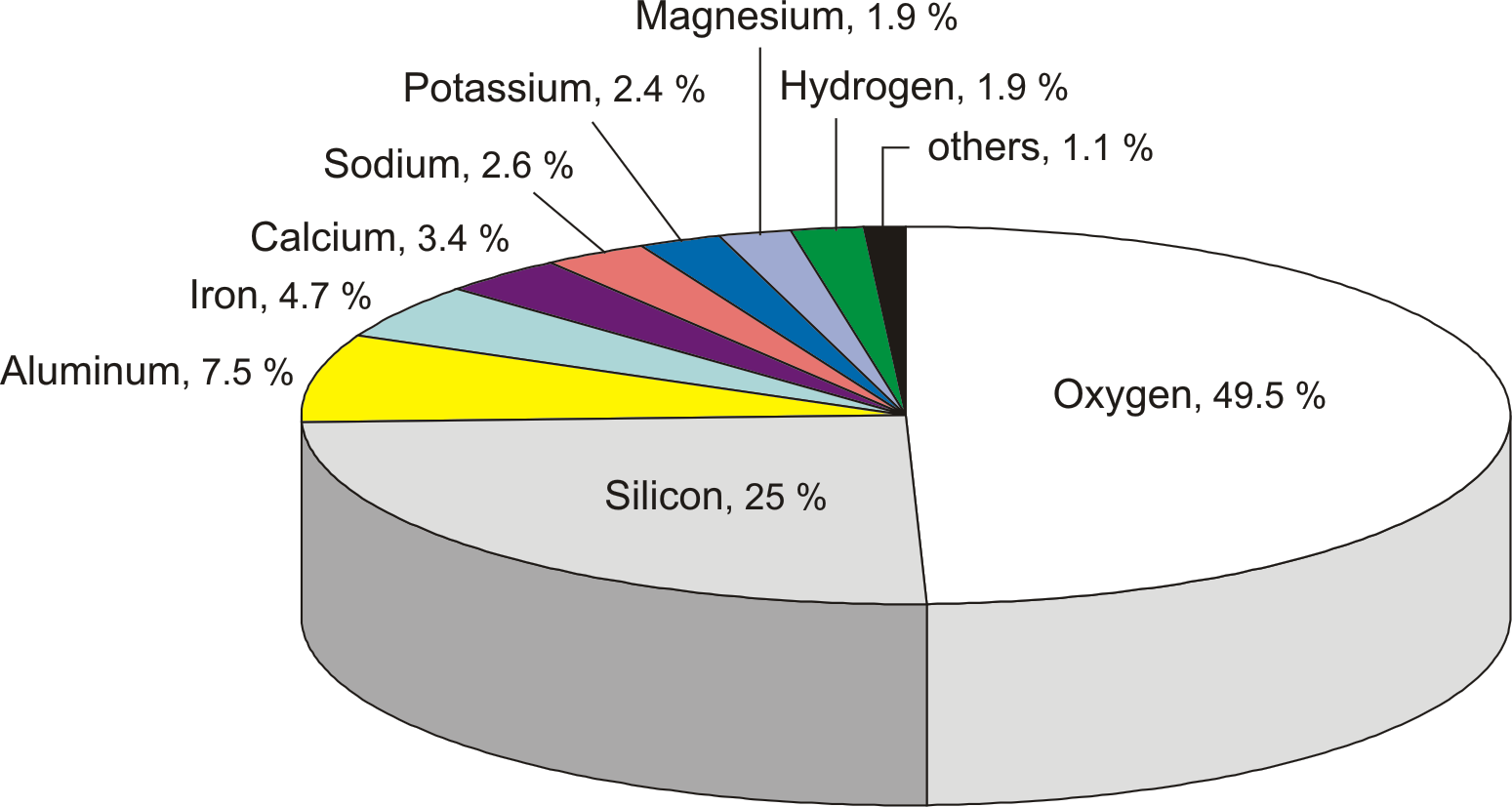
Elements in nature are mostly found in different compounds and, rarely, in the free (elementary) state. In Earth’s crust the most abundant of all elements is oxygen (with 49.5 %), then silicon (25 %), aluminium (7.5 %), iron (4.7 %), calcium (3.4 %), sodium (2.6 %), potassium (2.4 %), magnesium (1.9 %) and hydrogen (1.9 %). These nine elements make up almost 99 % of the Earth’s composition.
groups in periodic system of elements → skupine periodnog sustava
Periodic system of elements is divided into 18 groups of chemical elements. Elements belonging to the same group have a same number of valence electrons and similar chemical properties. Elements of main groups are in 1., 2., and in groups 13. to 18. Different groups of elements can be named according to the first element in the group (elements of boron group, elements of carbon group), or they have some special names (noble gases, halogenic elements, halyde elements, earthalkali and alkali metals).
periodic table of the elements → periodni sustav elemenata
Periodic table is a table of elements, written in sequence in the order of atomic number or atomic weight and arranged in horizontal rows (periods) and vertical columns (groups) to illustrate the occurrence of similarities in the properties of the elements as a periodic function of the sequence. The original form was proposed by Dmitri Mendeleev (1834-1907) in 1869, using relative atomic masses.

rare earth elements → elementi rijetkih zemalja
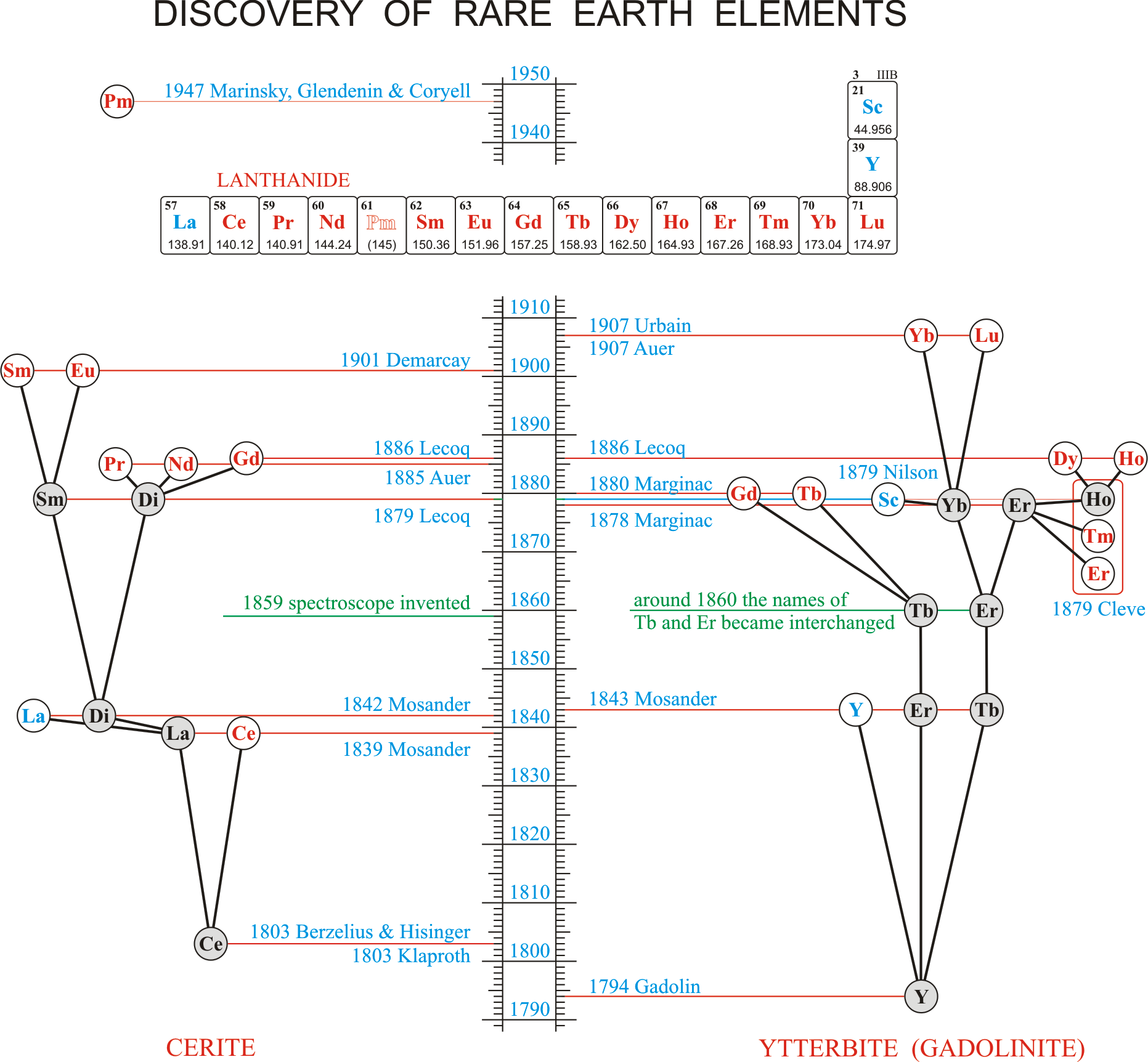
Rare earth elements (metals) are the elements scandium (Sc), yttrium (Y), and the lanthanides (La, Ce, Pr, Nd, Pm, Sm, Eu, Gd, Tb, Dy, Ho, Er, Tm, Yb, Lu). These elements got their name from the fact that chemists first isolated them in their oxide forms. These oxides somewhat resemble calcium, magnesium and aluminium oxides, sometimes called common earths. Do you want to know more?
transuranium element → trasuranski element
Transuranium elements are elements with an atomic number higher than 92 (uranium’s atomic number). Transuranium elements are unstable and occur in extremely low concentrations in nature. Most are made artificially.
chemical element → kemijski element
Chemical element is a type of matter of which elementary matter is composed. Chemical element is composed of atoms with the same core charge.
elementary particle → elementarna čestica
Elementary particle is one of fundamental particles of which matter is composed, such as the electron, proton or neutron.
elementary reaction → elementarna reakcija
Elementary reaction is a reaction that occurs in a single step. Equations for elementary reactions show the actual molecules, atoms, and ions that react on a molecular level.
elementary substance → elementarna tvar
Elementary substance is a simple and pure substance which can not be, by chemistry methods, decomposed further into simpler substances.
Citing this page:
Generalic, Eni. "Distribution of elements in nature." Croatian-English Chemistry Dictionary & Glossary. 29 June 2022. KTF-Split. {Date of access}. <https://glossary.periodni.com>.


 English

