
CHEMISTRY GLOSSARY
theoretical yield → teoretski prinos
Theoretical yield is the maximum quantity of a product that could be formed in a chemical reaction if all the limiting reactants reacted to form products (distinguished from actual yield).
theories of catalysis → teorije katalize
Theories of catalysis explain the influence of the catalysts upon the rate of a reaction by describing the detailed mechanism by which the catalyst is involved in the steps of the chemical reaction.
omega-3 fatty acids → omega-3 masne kiseline
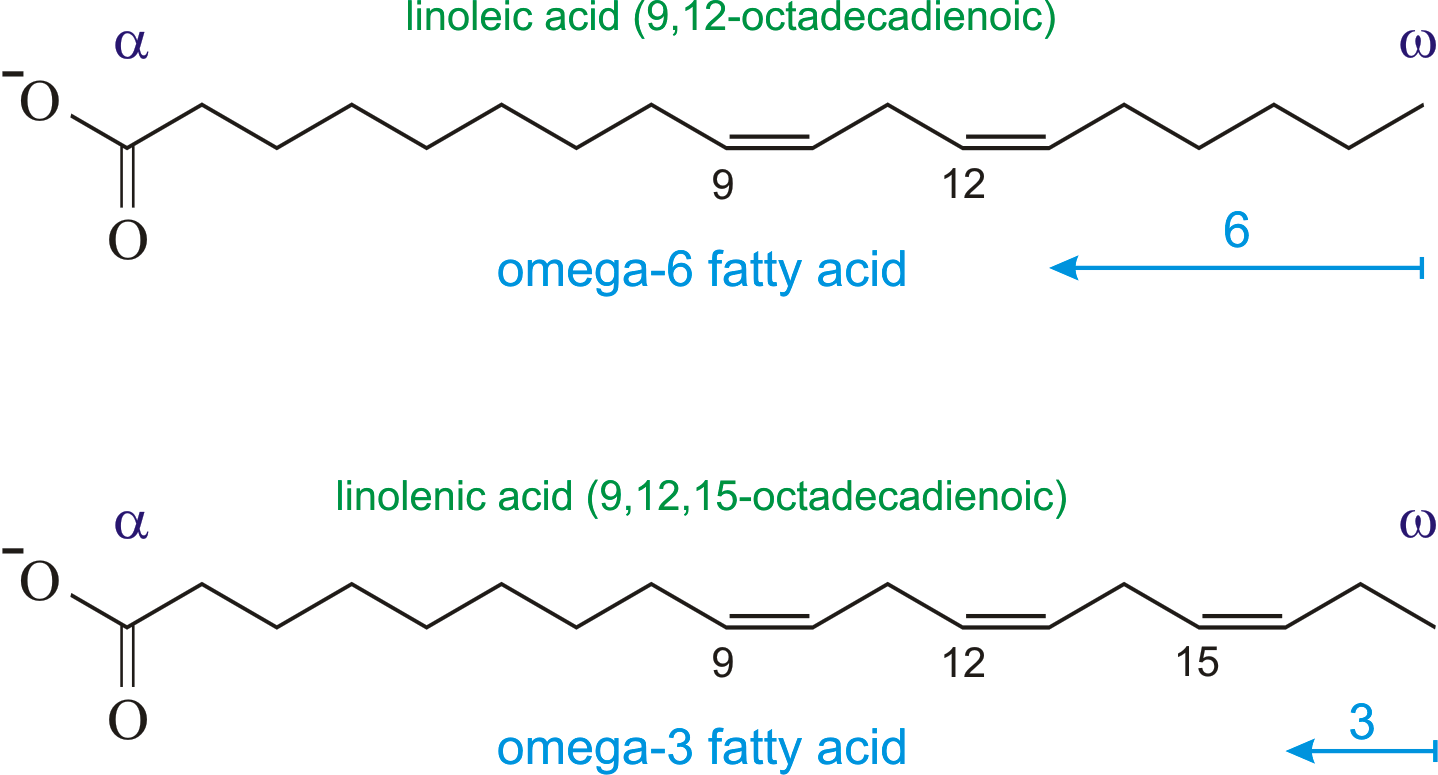
Omega-3 fatty acids are polyunsaturated fatty acids, meaning they contain more than one double bond. The name omega-3 indicates that the first double bond occurs on the third carbon atom (n-3) from the methyl (-CH3) end of the molecule (omega position). The three main omega-3 fatty acids are alpha-linolenic acid (ALA, 18:3n-3), eicosapentaenoic acid (EPA, 20:5n-3), and docosahexaenoic acid (DHA, 22:6n-3). ALA comes from plants. EPA and DHA come from fish.
Similarly, the first double bond in omega-6 fatty acids is located between the sixth and seventh carbon atom (n-6) from the methyl end of the fatty acid (omega end).
polyprotonic acids → poliprotonske kiseline
Polyprotonic acids are acids which dissolve in more than one degree.
amphoteric substances → amfoterna tvar
Amphoteric substances can behave as acids or as bases depending upon their surroundings. So aluminium hydroxide in reaction with acids will behave as a base
and in reaction with bases it will act as an acid
arginine → arginin
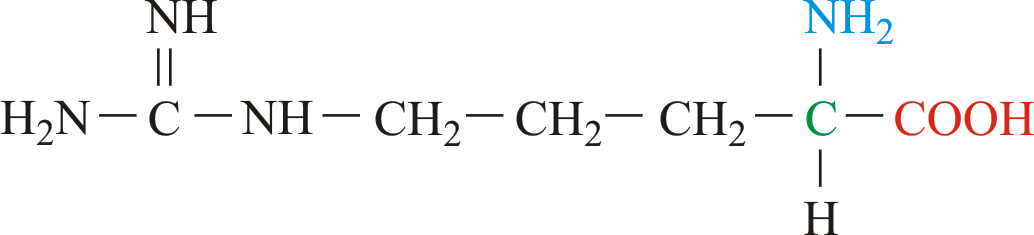
Arginine is an electrically charged amino acids with basic side chains. It is one of the least frequent amino acids. As a group the charged amino acids are important for making proteins soluble. These residues are generally located on the surface of the protein. Arginine is well designed to bind the phosphate anion, and is often found in the active centers of proteins that bind phosphorylated substrates. As a cation, arginine, as well as lysine, plays a role in maintaining the overall charge balance of a protein. Although arginine is considered an essential amino acid (it must be obtained through the diet), this is true only during the juvenile period in humans.
- Abbreviations: Arg, R
- IUPAC name: 2-amino-5-(diaminomethylideneamino)pentanoic acid
- Molecular formula: C6H14N4O2
- Molecular weight: 174.20 g/mol
buffer → pufer otopina
Buffer is a solution designed to maintain a constant pH when small amounts of a strong acid or base are added. Buffers usually consist of a fairly weak acid and its salt with a strong base. Suitable concentrations are chosen so that the pH of the solution remains close to the pKa of the weak acid.
Citing this page:
Generalic, Eni. "Bronsted-Lowry’s acid - base theory." Croatian-English Chemistry Dictionary & Glossary. 29 June 2022. KTF-Split. {Date of access}. <https://glossary.periodni.com>.


 English
