
CHEMISTRY GLOSSARY
supercritical fluid chromatography → superkritična fluidna kromatografija
Supercritical fluid chromatography (SFC) is a hybrid of gas and liquid chromatography. SFC is of importance because it permits the separation and determination of a group of compounds that are not conveniently handled by either gas or liquid chromatography. These compounds are either nonvolatile or thermally labile so that gas chromatography cannot be used and they do not contain functional groups that make possible detection by liquid chromatography. SFC has been applied to a wide variety of materials including natural prodcuts, drugs, foods, pesticides and herbicides, fossil fuels, explosives and propellants.
supercritical fluid extraction → superkritična fluidna ekstrakcija
Supercritical fluid extractions (SFE) have solvating powers similar to liquid organic solvents, but with higher diffusivities, lower viscosity, and lower surface tension. The main advantages of using supercritical fluids for extractions is that they are inexpensive, contaminant free, and less costly to dispose safely than organic solvents. For non-destructive isolation choose SFE, which is simply the best technology for sensitive raw materials. For these reasons supercritical carbon dioxide (scCO2) is the reagent used to extract caffeine from coffee and tea. Its gaslike behavior allows it to penetrate deep into the green coffee beans, and it dissolves from 97 % to 99 % of the caffeine present.
teflon → teflon
Teflon is a DuPont Company trademark for polytetrafluoroethylene (PTFE). It was discovered in 1938 by R. J. Plunkett. Teflon has the lowest coefficient of friction of any solid material known to man. It is also used as a non-stick coating for pans and other cookware. Teflon is very unreactive, and so is often used in containers and pipework for reactive chemicals. Its melting point is 327 °C.
thermal expansion → toplinsko rastezanje
Thermal expansion is a change in dimensions of a material resulting from a change in temperature. All objects change size with changes in temperature. The change ΔL in any linear dimension L is given by
in which α is the thermal coefficient of linear expansion, Lo is the initial or reference dimension at temperature To (reference temperature) and ΔT is change in temperature which causes the change in dimension.
The change ΔV in the volume of a sample of solid or liquid is
Here γ is coefficient of volume expansion, Vo is the volume of the sample at temperature To and ΔV is the change in volume over the temperature range ΔT. With isotropic substances, the coefficient of volume expansion can be calculated from the coefficient of linear expansion: γ = 3α.
thermosetting plastic → termostabilna plastika
Thermosetting plastics (thermosets) refer to a range of polymer materials that cure, through the addition of energy, to a stronger form. The energy may be in the form of heat (rubber), through a chemical reaction (two part epoxy), or irradiation. Thermoset materials are usually liquid or malleable prior to curing, and designed to be molded into their final form, or used as adhesive.
Thermoset polymer resins transformed into plastics or rubbers by cross-linking into a rigid, 3-D structure. A thermoset material cannot be melted and re-molded after it is cured.
thulium → tulij
Thulium was discovered by Per Theodore Cleve (Sweden) in 1879. Named after Thule, an ancient name for Scandinavia. It is soft, malleable, ductile, silvery metal. Tarnishes in air. Reacts with water. Flammable dust. Thulium is found with other rare earths in the minerals gadolinite, euxenite, xenotime and monazite. Radioactive thulium is used to power portable X-ray machines, eliminating the need for electrical equipment.
uranium → uranij
Uranium was discovered by Martin Heinrich Klaproth (Germany) in 1789. Named after the planet Uranus. It is silvery-white, dense, ductile, malleable, radioactive metal. Resists alkalis; tarnishes in air; attacked by steam and acids. Radiotoxic. Uranium occurs in many rocks, but in large amounts only in such minerals as pitchblende and carnotite. For many centuries it was used as a pigment for glass. Now it is used as a fuel in nuclear reactors and in bombs.
X-rays → X-zrake
X-rays are electromagnetic radiation of shorter wavelength than ultraviolet radiation (10-11 m to 10-9 m or 0.01 nm to 1 nm) produced by bombardment of atoms by high-quantum-energy particles. X-rays can pass through many forms of matter and they are therefore used medically and industrially to examine the internal structure.

zeolite → zeolit
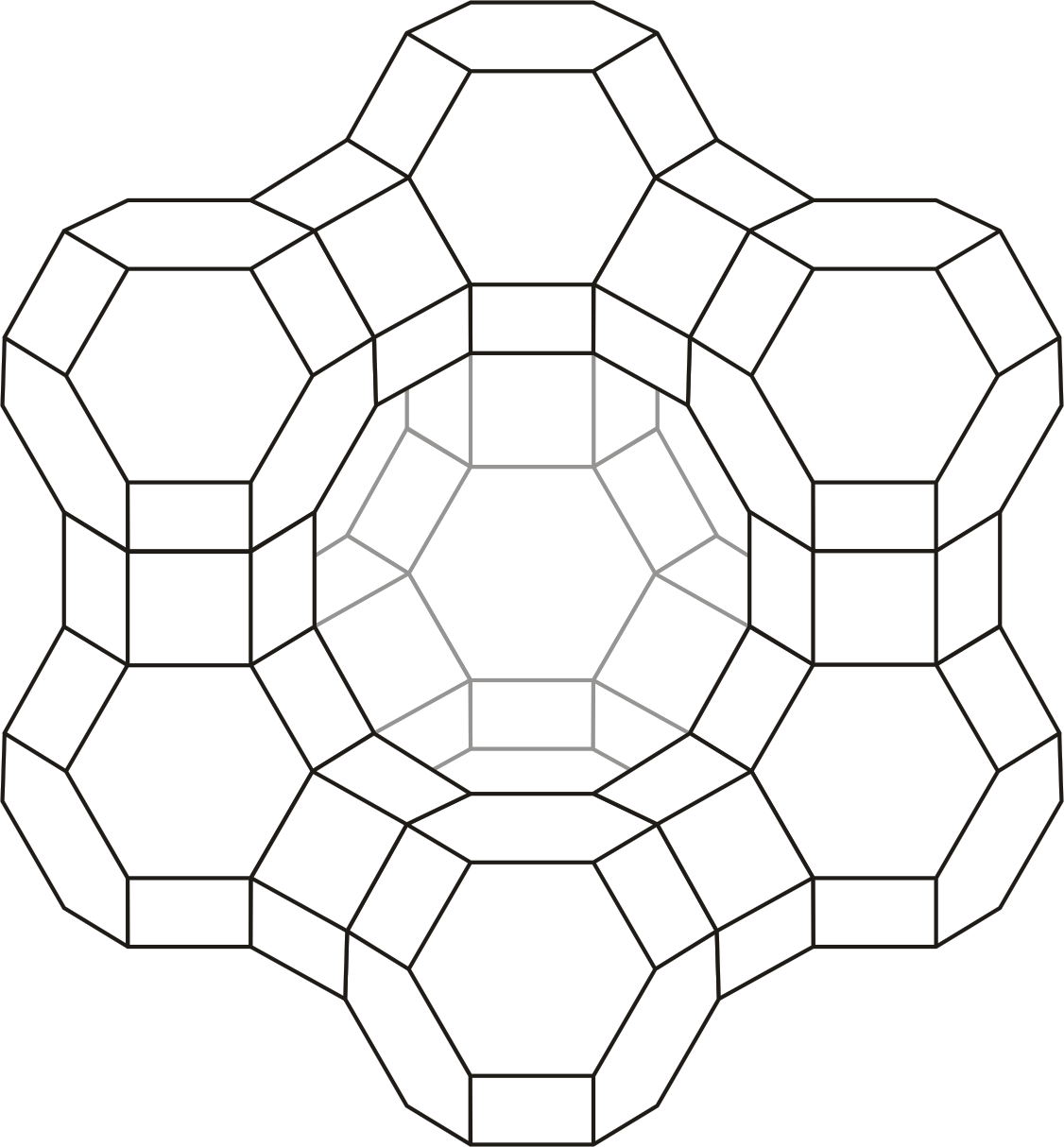
Zeolite is a natural or synthetic hydrated aluminosilicate with an open three-dimensional crystal structure, in which water molecules are held in cavites in the latice. The water can be driven off by heating and the zeolite can then absorb other molecules of suitable size. Zeolites are used for separating mixtures by selective absorption.
velocity → brzina
If a point-like object moves so that its position vector changes from being ri to rf, than the displacement Δr of object is
If a point-like object undergoes a displacement, Δr, in time Δt, its average velocity, v is defined as
The instantaneous velocity, v, is obtained from the average velocity by shrinking the time interval Δt towards zero. The average velocity approaches a limiting value, which is the velocity of a given instant:
Velocity is a vector quantity. If we plot the path of a moving particle as a curve in a coordinate system, the instantaneous velocity is always tangent to that curve.
SI unit for velocity is m s-1.
Citing this page:
Generalic, Eni. "Sintetički materijal." Croatian-English Chemistry Dictionary & Glossary. 29 June 2022. KTF-Split. {Date of access}. <https://glossary.periodni.com>.


 English
