
CHEMISTRY GLOSSARY
laminar flow → laminarno strujanje
Laminar flow is a smooth, uniform, non-turbulent flow of a gas or liquid in parallel layers, with little mixing between layers. It is characterised by small values of the Reynolds number.

flotation → flotacija
Flotation is a procedure in which hydrophobic solid substances are separated from hydrophilic one using bubbles of air. If air is blow through a suspension, in which substances promoting easier creation of foam are added, bubbles of air are created which stick to the hydrophobic matter and carry it out to the surface.
air stripping → zračni striping
Air stripping is a process for the removal of volatile organic contaminants from groundwater. The groundwater flows downward inside a tower filled with materials (the packing) over a large surface area. Air is introduced at the bottom of the tower and is forced upward past the falling water. The volatiles evaporate from the water and are collected in air filters or released to the atmosphere.
Archimedes law → Arhimedov zakon
The upward force (buoyancy force) is exerted on a body floating in a fluid. It equals the weight of the displaced fluid.
bag filter → vrećasti filtar
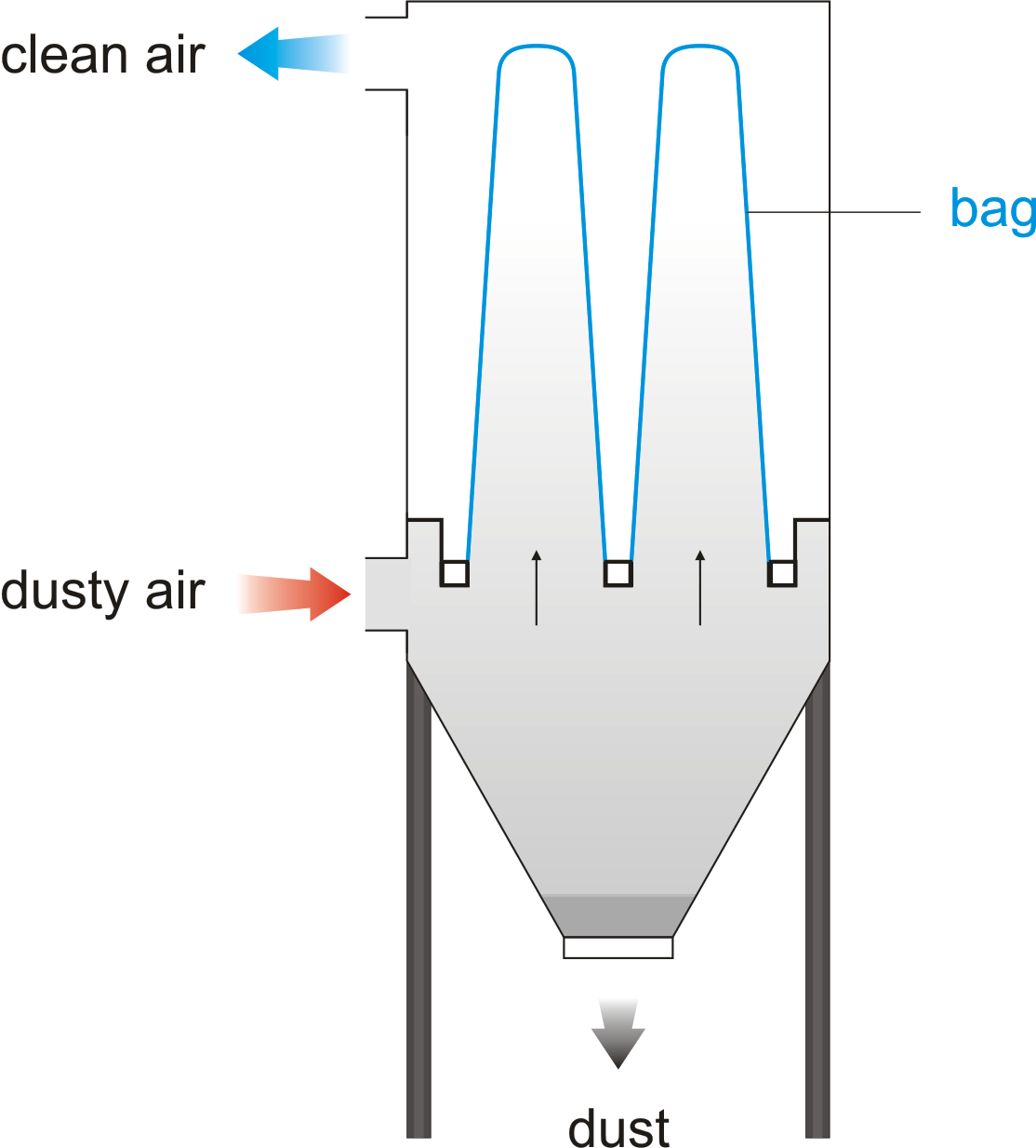
Bag filter is a unit within a mechanical system that bellows in a bag form when air flows through, cleaning the air by collecting particles of foreign matter. This system of filtering is rated the most efficient- in a range of 92 % to 95 %. Vacuum cleaner have a cloth filter bag.
Bag filter system is an economical method of liquid filtration consisting of the pressure vessel, restrainer basket and micron rated filter bag. Liquid flow is from the inside to the outside of the bag - dirt is trapped inside the bag.
bathymetry → batimetrija
Bathymetry (from the Greek word bathus, deep) is the science of measuring the depths of the oceans, seas, lakes, etc. or the topographic maps of the sea floor that result from such measurements. Bathymetric charts are designed to present accurate, measurable description and visual presentation of the submerged terrain.
battery → baterija
Battery a device that converts chemical energy to electrical energy. The process underlying the operation of a battery involves a chemical reaction in which electrons are transferred from one chemical species to another. This process is carried out in two half-reactions, one that involves the loss of electrons and one that involves their gain. The battery is an electrochemical cell divided in two half-cells, and reaction proceeds when these are connected together by an electrically conducting pathway. The passage of electrons from one half-cell to the other corresponds to an electric current. Each half-cell contains an electrode in contact with the reacting species. The electrode which passes electrons into the circuit when battery discharges is called anode and is negative terminal. The electrode which receives electrons is called cathode, and is the battery’s positive terminal. The electrical circuit is completed by an electrolyte, an electrically conducting substance placed between the two electrodes which carriers a flow of charge between them. In wet cells, the electrolyte is a liquid containing dissolved ions, whose motion generates an electrical current; in dry cells the electrolyte is basely solid, for example, a solid with mobile ions or porous solid saturated with an ionic solution.
concentration of ore → koncentriranje ruda
Concentration of ores is important industrial processes and is the first steps to the extraction of the metals. Normally, the ore is concentrated by separating it from the clay body in which it occurs either by gravity, sedimentation, or by a floatation process, before the extraction of the metal from the ore is started.
Donnan potential → Donnanov potencijal
Donnan potential is the electrical potential difference between two solutions separated by an ion-exchange membrane in the absence of any current flowing through the membrane
Bunsen burner → Bunsenov plamenik
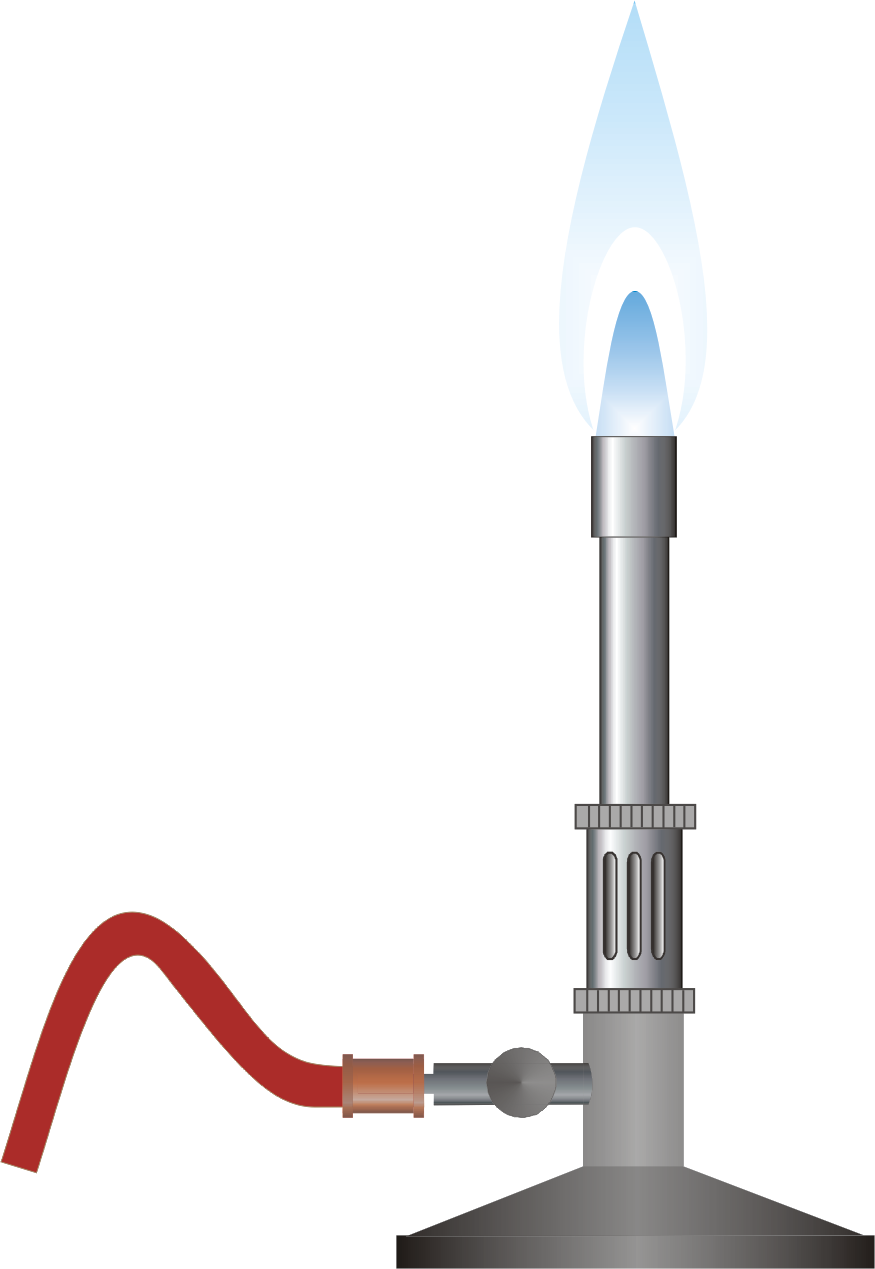
Bunsen burner is a standard source of heat in the laboratory. German chemist Roberts Bunsen (1811-1899) improved the burner's design, which had been invented by Faraday, to aid his endeavors in spectroscopy. The Bunsen burner has a vertical metal tube through which a fine jet of fuel gas is directed. Air is drawn in through airholes near the base of the tube and the mixture is ignited and burns at the tube’s upper opening. The flow of this air is controlled by an adjustable collar on the side of the metal tube. When the whole is closed a yellow safety flame is displayed. Where as when the whole is open it displays a power dull blue flame with a faint blue outer flame with a vibrant blue core used u for combustion and hearting. The flame can reach temperatures of 1 500 °C.
Citing this page:
Generalic, Eni. "Flow." Croatian-English Chemistry Dictionary & Glossary. 29 June 2022. KTF-Split. {Date of access}. <https://glossary.periodni.com>.


 English

