
CHEMISTRY GLOSSARY
electronegativity → elektronegativnost
Electronegativity is a parameter originally introduced by L. Pauling which describes, on a relative basis, the power of an atom to attract electrons. For example, in hydrogen chloride, the chlorine atom is more electronegative than the hydrogen and the molecule is polar, with a negative charge on the chlorine atom.
There are various ways of assigning values for the electronegativity of an element. Pauling electronegativities are based on bond dissociation energies using a scale in which fluorine, the most electronegative element, has the value 4 and francium, the lowest electronegative element, has the value 0.7.
monochromator → monokromator
Monochromator (from the Greek words mono and chroma meaning single and colour) is an optical device based on dispersion of light by one or more prisms or diffraction gratings into its constituent wavelengths, which are utilized in turn.neutral oxide → neutralni oksid
Neutral oxides are those oxides which show neither basic nor acidic properties when they react with water. Examples include carbon monoxide (CO) and nitrous oxide (N2O) which are only slightly soluble in water, and nitric oxide (NO) which is appreciably soluble in cold water.
neutral substance → neutralna tvar
Neutral substance is a substance that shows no acid or base properties, has an equal number of hydrogen and hydroxyl ions and does not change the colour of litmus-paper.
neutralisation → neutralizacija
Neutralisation is the process in which an acid reacts with a base to form a salt and water.
Pauling scale → Paulingova skala
Pauling scale is a numerical scale of electronegativities based on bond-energy calculations for different elements joined by covalent bonds. Electronegativity is the power of an atom when in a molecule to attract eletrons to itself. Fluorine is the most electronegative element with a Pauling electronegativity value of 4.
electrophoresis → elektroforeza
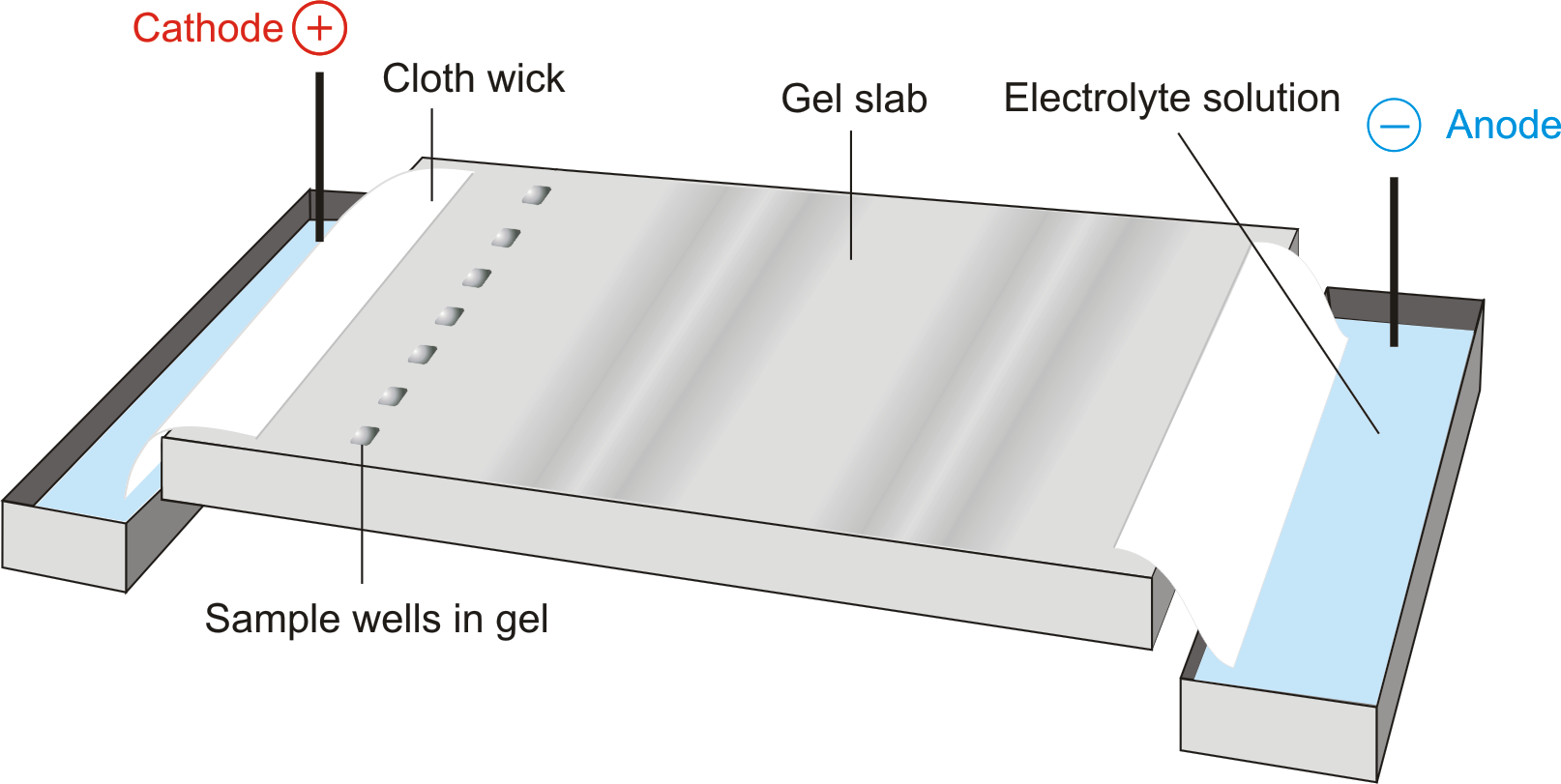
Electrophoresis is a technique for the analysis and separation of colloids, based on the movement of charged colloidal particles in an electric field. The migration is toward electrodes of charge opposite to that of the particles. The rate of migration of the particles depends on the field, the charge on the particles, and on other factors, such as the size and shape of the particles.
Electrophoresis is important in the study of proteins. The acidity of the solution can be used to control the direction in which a protein moves upon electrophoresis.
equal-arm balance → vaga s jednakim krakovima
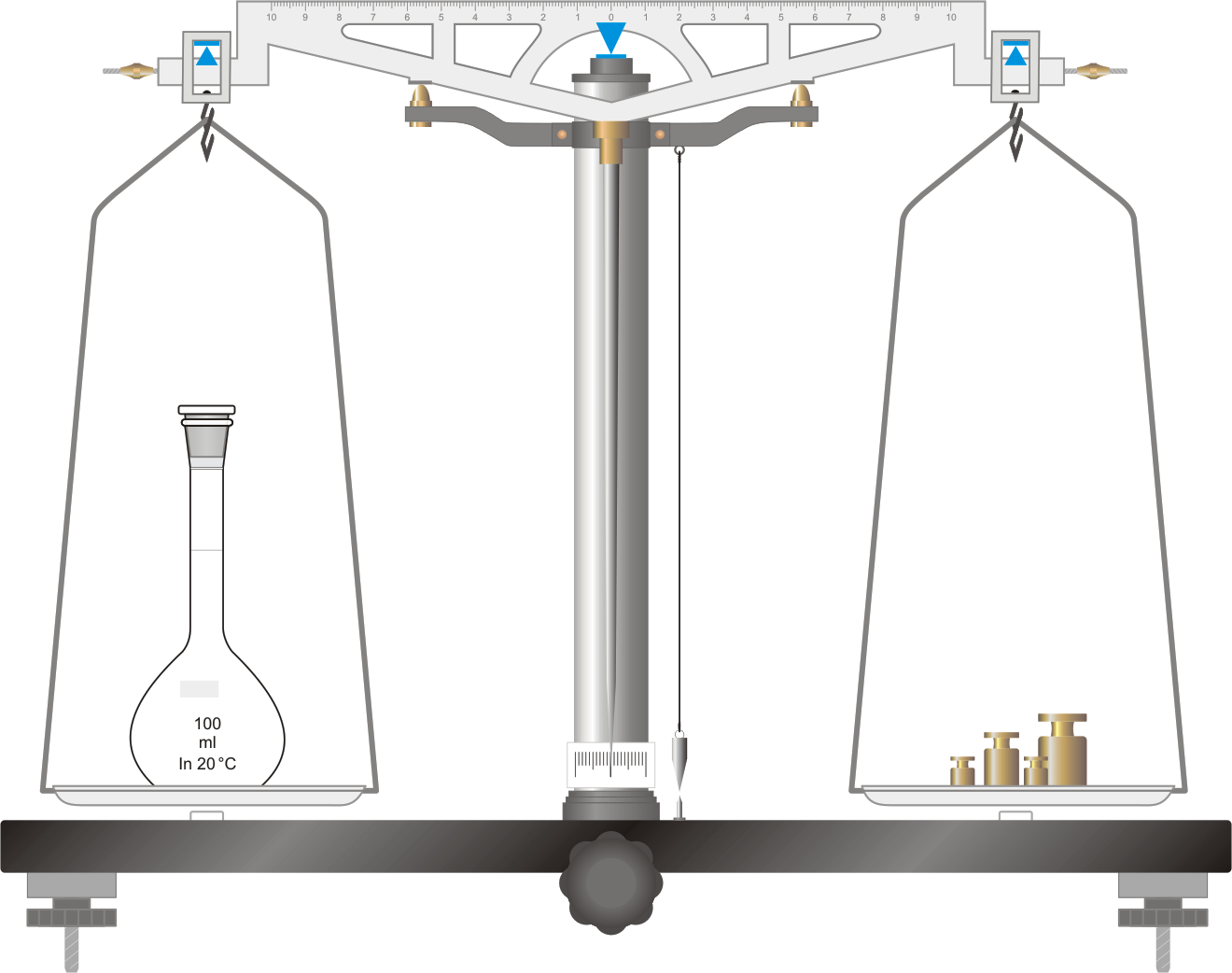
The simplest type of balance, the equal-arm balance, is an application of a first class lever. The beam of the balance is supported on a central knife-edge, usually of agate, which rests upon a plane agate plate. The point of support is called the fulcrum. Two pans of equal weight are suspended from the beam, one at each end, at points equidistant from the fulcrum. A long pointer attached at right angles to the beam at the fulcrum indicates zero on a scale when the beam is at rest parallel to a level surface.
To prevent the knife-edge from becoming dull under the weight of the beam and pans the balance is equipped with a special device called an arrest. The arrest is operated by means of milled knob underneath the base plate in the middle and in front of the balance (sometimes the arrest knob is at one side of the balance).
The object to be weighed is placed on one pan, and standard weights are added to the other until the balance of the beam is established again. When not in use and during loading or unloading of the pans, the balance should be arrested.
primary amine → primarni amin
Primary amine is an amine on which there is only one alkyl group bonded, it is a weak base, and has a fish odour.
Citing this page:
Generalic, Eni. "Base-centered orthorhombic lattice." Croatian-English Chemistry Dictionary & Glossary. 29 June 2022. KTF-Split. {Date of access}. <https://glossary.periodni.com>.


 English
